
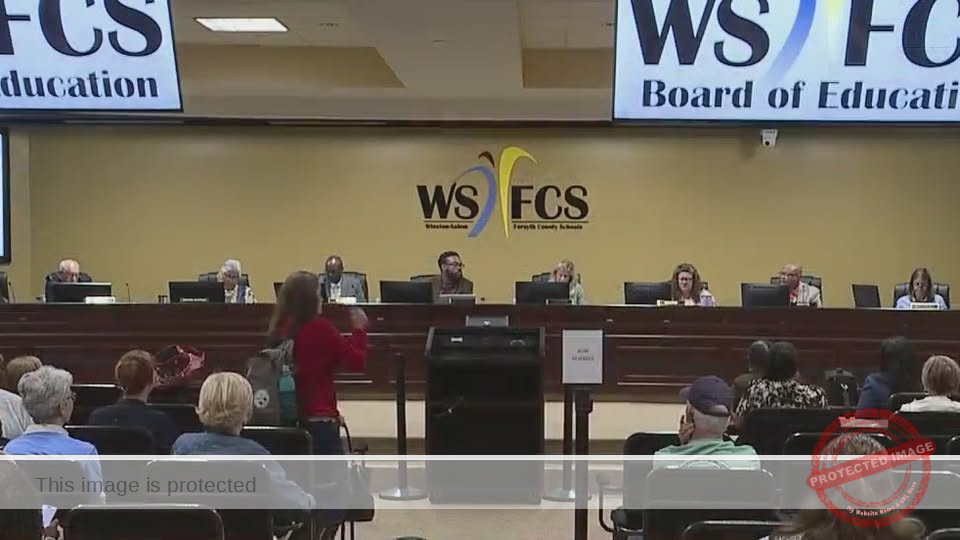
FORSYTH COUNTY, N.C. (WGHP) — A significant change in benefits for current and retired employees of Winston-Salem/Forsyth County Schools was confirmed this week, as the Board of Education voted 7-2 to cut free dental care for employees in response to ongoing budget constraints.
The move to transition dental care from a district-funded benefit to an employee-funded one was proposed several months ago, and despite strong opposition from some educators and board members, it was passed during a recent meeting.
What Happened:
Forsyth County Association of Educators (FCAE) President Jenny Easter voiced strong objections to the decision, walking out of the meeting after imploring the board to reconsider. Easter emphasized that this change came after a series of other budget cuts, including reductions to staffing, supplies, and overall funding for schools.
Easter argued that dental care was one of the few remaining benefits that provided comfort and security to employees, especially after other sacrifices had been made.
“We have endured cut after cut, indignity after indignity,” Easter stated. “Respectfully, Superintendent Moore is here to balance a budget, but you, the board, still have a choice. You do not have to approve everything put in front of you.”
Who Opposed the Decision:
Board Members Sabrina Coone and Robert Barr also opposed the motion to cut free dental care. They were concerned that eliminating the benefit would significantly impact the wellbeing of the district’s employees, particularly retirees.
Another speaker, who represented retirees, also raised concerns, urging the board not to cut a benefit that had been essential for many of them. “We know these cuts are things you have to sink your teeth into. Please don’t let it be our teeth,” the speaker said, drawing a strong emotional response from the audience.
The Decision and Its Impact:
The board’s decision to eliminate free dental care will save the district an estimated $1.3 million initially, with savings increasing to approximately $2.5 million in the coming years. These savings are projected to cover about 33 employee salaries.
In an effort to balance the needs of employees and the financial realities, Board Member Richard Watts asked if there was room for compromise, suggesting the possibility of preserving the benefit for retirees but not for current employees. However, Superintendent Moore argued that such a move would be difficult to implement without additional funding and that most other districts had already made similar cuts.
The new self-pay dental plan will take effect in January 2026, with individual coverage costing around $35 per month, and family coverage priced at $105 per month.
Public Reaction:
The move has sparked mixed reactions among the community. While some acknowledge the district’s need to cut costs, others argue that the loss of dental benefits represents yet another blow to employees who are already facing multiple cuts and challenges. Teachers, staff, and retirees alike are now grappling with the reality of reduced benefits as the district works to manage its budget.
This story may be updated as more information becomes available.
