
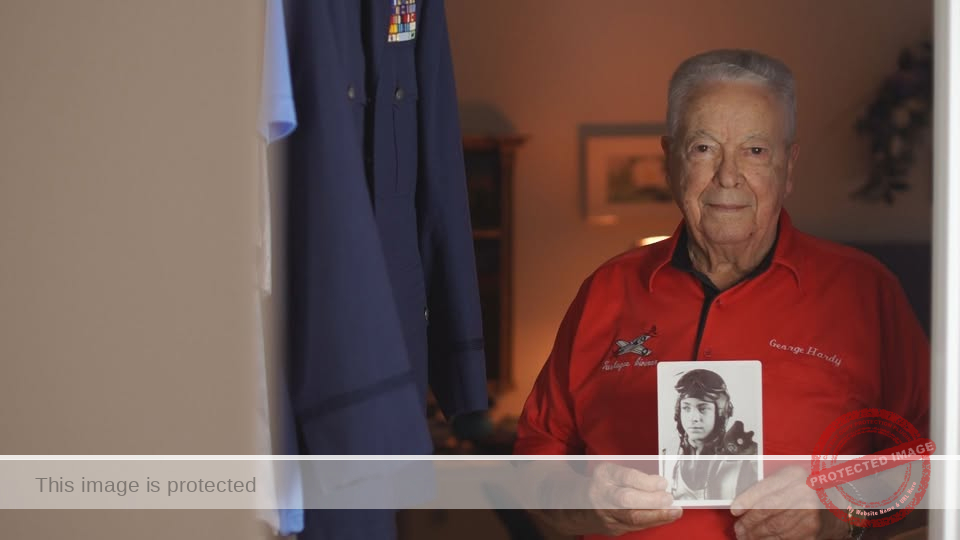
Sarasota, FL — Lt. Col. George Hardy, one of the last surviving Tuskegee Airmen, has passed away at the age of 100. Hardy was a trailblazer in aviation history and one of the youngest Red Tail fighter pilots, flying his first combat sortie at just 19 during World War II.
What Happened
Hardy passed away on Thursday, marking the end of an era for the Tuskegee Airmen, a group of pioneering Black aviators who defied racism and prejudice to serve in the military. According to Tuskegee Airmen, Inc., Hardy was the last surviving Tuskegee Airman to have flown in combat. However, 13 other Tuskegee Airmen, who trained at Tuskegee but never saw combat, remain alive today.
The Tuskegee Airmen, Inc. National Office shared a heartfelt tribute following Hardy’s death, calling his legacy one of courage, resilience, and perseverance against racism and prejudice. “We are forever grateful for his sacrifice and will hold dear to his memory,” the post read, offering condolences to Hardy’s family, friends, and the remaining Tuskegee Airmen.
Hardy’s Historic Service
Hardy’s military career was extraordinary. He joined the military in 1943 at 18 and went on to serve in three wars—World War II, Korea, and Vietnam. Hardy flew a total of 136 combat missions, including 21 combat missions over Europe in a P-51 during World War II.
Reflecting on his service, Hardy once said, “I flew in World War II. P-51. 21 combat missions over Europe.” His career came at a time when the military was still segregated, and racial discrimination was rampant. Hardy faced numerous obstacles, but he and the other Tuskegee Airmen proved that African Americans were more than capable of flying airplanes and defending their country.
A Legacy of Resilience
In previous interviews, Hardy shared how the Army War College’s 1925 report, which claimed African Americans were mentally unfit for aviation, shaped his path. “We disproved that theory. In fact, we did a hell of a good job, I thought,” Hardy recalled proudly.
His experiences in the air weren’t just about fighting fascism abroad but also battling racism at home. Despite the many challenges, Hardy remained committed to his duty, saying, “The thing is, it’s our country too, so we’ve got to work for our country no matter what the situation.”
Even in his later years, Hardy remained active in his community, volunteering at food pantries and sharing his story with groups across the nation. He often expressed how important it was for people to learn the history of the Tuskegee Airmen so their legacy wouldn’t be forgotten. “Servicemen gave their all in the service of this country,” Hardy said. “Many of them didn’t come back. And we should pay tribute to them.”
What Happens Next
Lt. Col. Hardy’s passing marks the end of an era for the Tuskegee Airmen, a group whose service and legacy continue to inspire generations of Americans. His hope was always that his story and the story of his fellow airmen would be remembered so that their sacrifices were not in vain.
This story may be updated with more information as it becomes available.
