
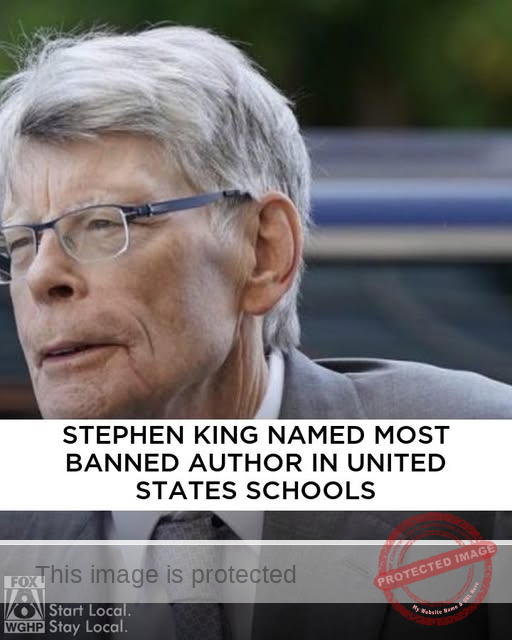
Best-selling author Stephen King has been identified as the most banned writer in the 2024-2025 school year, according to PEN America’s latest report on book censorship in U.S. schools. With 87 of his books, including The Stand, It, and The Shining, banned 206 times during the year, King’s works have become the target of widespread censorship efforts across the nation.
A Surge in Book Bans Across the U.S.
PEN America’s report, released recently, revealed that there were 6,870 instances of book bans across 87 school districts in 23 states between July 2024 and June 2025. The report also noted that Florida continues to lead as the state with the highest number of book bans, a position it has held for the third consecutive year, followed by Texas and Tennessee.
Kasey Meehan, Director of PEN America’s Freedom to Read program, emphasized the growing and concerning trend of censorship in schools, stating that the nature of book bans has evolved, becoming more normalized and taking on various forms, including legal pressures, “do not buy” lists, and the mislabeling of books as “explicit” materials.
Censorship and the Targeting of Controversial Books
PEN America pointed out that the surge in book bans is largely driven by organized efforts by groups with “anti-woke, anti-DEI, and anti-LGBTQ+” agendas. Books with LGBTQ+ themes or that address social issues have been particularly targeted.
The top five banned books this year included Anthony Burgess’s A Clockwork Orange, Patricia McCormick’s Sold, Jennifer Niven’s Breathless, Malinda Lo’s Last Night at the Telegraph Club, and Sarah J. Maas’s A Court of Mist and Fury.
Impact of the Ban on Stephen King’s Works
Stephen King’s extensive library, which spans genres from horror to suspense, has long been a staple of literary culture. However, his works have found themselves on the front lines of the book banning debate due to their often controversial themes. From graphic violence to social commentary on race and class, King’s books have been challenged by groups who argue that they are inappropriate for students. The 206 bans of King’s works highlight the ongoing tensions between freedom of expression and calls for more controlled reading materials in schools.
Closing: The Worsening Trend of Censorship
PEN America’s report paints a troubling picture of the growing trend of censorship in U.S. schools. The normalization of book banning, particularly against works that challenge societal norms or address sensitive issues, is causing concern about the future of intellectual freedom in education. As the debate continues, the question of whether books should be restricted in school libraries remains a point of contention in the broader conversation about freedom of speech and access to diverse ideas.
This story may be updated as new developments on book bans emerge.
