
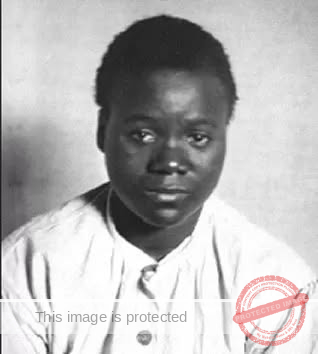
Virginia Christian, a 17-year-old African American girl, became the first and last female juvenile to be executed in the electric chair in 1912. Her death, amidst the harsh backdrop of Jim Crow legislation and racial injustice, remains a tragic symbol of the disparities in the American justice system, particularly for people of color.
What Happened
On March 18, 1912, Virginia Christian, a 13-year-old African American girl, was accused of stealing from her employer, Mrs. Ida Virginia Belote, a prominent 51-year-old white woman from Hampton, Virginia. When Virginia denied the accusation, a violent confrontation ensued. Mrs. Belote, known to have frequently abused Virginia, threw a clay pot at her, followed by shattered pieces of the pot and a broom. In a desperate act of self-defense, Virginia grabbed the broom and struck Mrs. Belote over the head. When Mrs. Belote screamed, Virginia, terrified, shoved a towel in her mouth to silence her. Tragically, this action led to Mrs. Belote suffocating to death.
Virginia immediately confessed to the crime, asserting that she had no intention of killing her employer but had acted out of fear, not realizing Mrs. Belote was dead. However, her confession and the circumstances surrounding her actions were largely disregarded during her trial.
The Trial and Execution
Virginia Christian’s trial was marked by racial and gender bias. The constant physical abuse from Mrs. Belote was not considered in her defense, and the possibility of self-defense was ignored. Despite being a 13-year-old girl, Virginia was sentenced to death, with the execution scheduled in the electric chair at the state penitentiary in Richmond, Virginia.
Her mother, paralyzed and unable to care for her, pleaded for mercy in a letter to Governor William Hodges Mann, begging for her daughter’s life to be spared. “If you only save my child who is so little, God will bless you forever,” she wrote. Yet, her plea was ignored, and the execution went forward.
The Outcry and Aftermath
Virginia’s case sparked outrage across the nation, with many criticizing the state for sentencing such a young, abused child to death. E. Val Putnam, a newspaper editor, condemned the execution, highlighting the state’s responsibility in neglecting Virginia’s upbringing. He argued that her youth, race, and lack of education were contributing factors that society had failed to address. In the months leading up to her execution, Governor Mann received hundreds of letters protesting the death sentence, yet he refused to intervene.
On the day before her execution, the headlines read: “Mann Will Not Save Negress,” a stark reminder of the systemic racism that prevailed. On the day after her 17th birthday, Virginia was executed, marking a tragic end to a life that had barely begun. She spent her last night peacefully, unaware of the fate that awaited her. Virginia’s final meal was a modest one: rolls, eggs, and coffee.
Public and Social Media Reactions
The execution of Virginia Christian is still remembered as one of the most unjust and controversial deaths in the history of the American criminal justice system. Her story has become a symbol of racial injustice, gender discrimination, and the failings of a legal system that condemned a young girl to die despite her tragic circumstances.
The injustice of Virginia’s death continues to resonate with advocates of racial equality and criminal justice reform. Her story serves as a reminder of the disproportionate impact of the death penalty on people of color and the systemic racism that continues to plague the justice system today.
Legacy and Reflection
After Virginia’s execution, her body was handed over to the state medical school as her parents could not afford to transport her remains. In death, as in life, Virginia was treated as a commodity, a tragic symbol of a society that failed to protect her.
Virginia Christian’s story is one of many that illustrates the horrors of a broken system. It is a poignant reminder of the lives lost and the injustices that continue to shape America’s history. May her name never be forgotten, and may we strive to ensure that no child, no matter their race or background, suffers a fate like hers.
Closing Line
Virginia Christian’s execution remains one of the most haunting reminders of racial injustice in America. As we reflect on her story, may we continue to fight for fairness and equality in the criminal justice system.
