
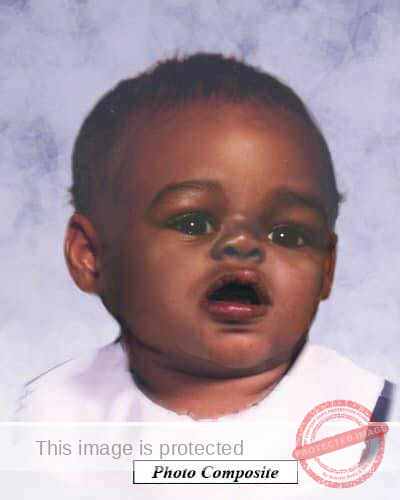
On August 20, 2003, Al Tomes made a chilling discovery near his home in Gainesville, Florida. What he initially thought was a baby doll floating in a pond turned out to be a real infant girl, later known as “Baby Jane Doe.” Despite years of investigation, her identity remains a haunting mystery, one that has puzzled authorities and the public alike.
What Happened
On that fateful day in August 2003, Al Tomes was near his home on NW 102nd Place in Gainesville, Alachua County, Florida, when he noticed something floating in a pond. Initially assuming it was a discarded baby doll, Tomes approached to investigate, only to make the horrifying realization that it was a real infant girl. The baby, estimated to weigh approximately 6 pounds, appeared to be between two weeks and five months old.
The Alachua County Sheriff’s Office launched an extensive investigation, canvassing the neighborhood, examining local school and hospital records, and making public appeals for assistance. Despite these efforts, the identity of the infant, later dubbed “Baby Jane Doe,” remained unknown.
The Ongoing Investigation
Over the years, several efforts were made to identify Baby Jane Doe. Despite the best efforts of law enforcement, including neighborhood canvases and public appeals, no leads came forward to help identify her. In 2016, with support from the community at First Baptist Church, the infant’s body was exhumed for further investigation. Facial reconstruction and isotope testing were conducted in an attempt to gain new insights into her origins. She was reinterred in 2017.
Recent DNA testing and isotope analysis have provided some crucial clues: Baby Jane Doe was identified as an African-American infant, with both parents likely of Caribbean descent. This information brought new hope for solving the case, but the investigation has yet to reveal her identity.
DNA Genealogy Efforts
In a groundbreaking move, the bone material of Baby Jane Doe was sent to Identifinders, an organization led by Dr. Colleen Fitzpatrick, which specializes in DNA genealogy techniques similar to those used to solve high-profile cold cases, including identifying the Golden State Killer. This advanced forensic technology has proven successful in solving many mysteries, but Baby Jane Doe’s identity remains elusive.
Despite the innovative techniques and efforts from Dr. Fitzpatrick’s team, the identity of Baby Jane Doe is still unknown. The mystery surrounding her origins continues to haunt those involved in her case, from the investigators to the people who have cared for her memory.
Public and Social Media Reactions
The story of Baby Jane Doe has touched many, with her case drawing widespread attention on social media and true crime forums. The public’s curiosity and desire for closure have sparked conversations about the challenges of identifying unknown victims and the importance of forensic science in solving such cases.
Many supporters have expressed their dedication to helping solve the mystery, with some hoping that modern DNA and genealogical advancements might eventually provide answers. The case has prompted widespread discussions on issues such as child abandonment, the role of forensic science in cold cases, and the lengths to which communities and investigators will go to solve a mystery.
Official Statements or What Happens Next
The Alachua County Sheriff’s Office continues to investigate the case, and Baby Jane Doe’s story is far from over. With the help of DNA genealogy experts and ongoing efforts to identify her, there is still hope that this case will eventually be solved. As of now, her identity remains a mystery, and anyone with information is encouraged to come forward.
Authorities and supporters continue to honor Baby Jane Doe’s memory, hoping that one day, the mystery of who she was and who left her in that pond will be solved.
Closing Line
This story may be updated with more information as it becomes available.
