
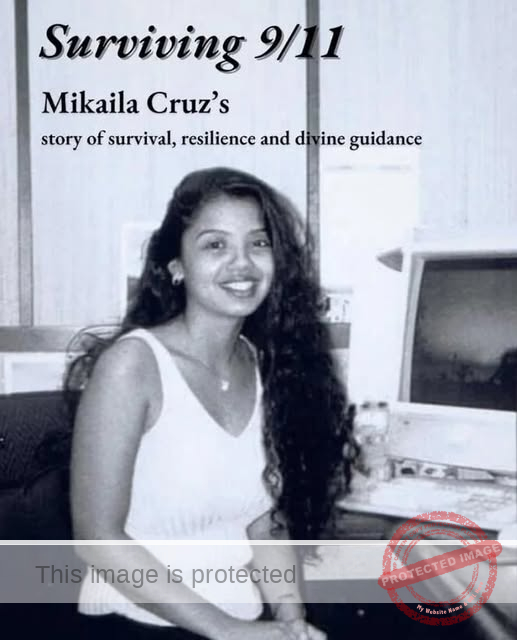
Mikaila Cruz, a survivor of the 9/11 attacks, reflects on her harrowing experience as she narrowly escaped death at the South Tower of the World Trade Center. Now in her 60s, Mikaila continues to share her story with others, highlighting the importance of listening to one’s instincts and the preciousness of life.
What Happened: Mikaila’s Near-Death Experience on 9/11
On the morning of September 11, 2001, Mikaila Cruz boarded her regular PATH train from New Jersey, heading into Manhattan to work as an administrative assistant on the 61st floor of the South Tower of the World Trade Center. It was a clear, sunny day, and everything felt normal until 8:46 a.m. when the first plane struck the North Tower. The building shuddered violently, and papers flew off desks. At first, no one understood what had happened, and a voice over the loudspeaker told everyone in the South Tower that their building was secure.
However, Mikaila had a gut feeling, what she later described as “a whisper from above telling me to go.” She grabbed her belongings and left the office, urging some coworkers to follow her, but others hesitated. As she made her way down to the 44th-floor sky lobby, tragedy struck again.
At 9:03 a.m., United Airlines Flight 175 crashed into the South Tower, sending shockwaves through the building. The impact threw Mikaila and others to the ground. The tower swayed, and chaos ensued as smoke filled the air. “I remember holding a stranger’s hand the whole way down,” she recalls.
The Journey Down: Escaping the South Tower
Mikaila, along with others, began their descent down the stairwell, helping the injured and offering comfort to one another. They paused only when rescue workers passed them, climbing up toward the danger they had just escaped. Finally, Mikaila made it to the concourse level, where she stepped outside into a scene of devastation. As she walked towards Church Street, covered in dust, she looked back to see the South Tower burning. Within an hour, the building would collapse.
At 9:59 a.m., just 56 minutes after Mikaila’s escape, the South Tower crumbled to the ground. Mikaila was walking near City Hall when she heard the deafening rumble and saw the massive cloud of debris rolling toward her. She ducked into a doorway for cover, not yet realizing that the tower she had just left was now gone.
A Changed Life: The Aftermath of 9/11
That night, Mikaila, still in shock, walked over the Brooklyn Bridge with thousands of others, silent and changed forever. She eventually made it to her sister’s apartment in Queens, where the weight of the day’s events overwhelmed her, and she collapsed in tears.
In the months that followed, Mikaila attended memorials and connected with fellow survivors. Many of her coworkers didn’t make it out, and the bond between survivors became a source of strength and shared healing. Mikaila often reflects on her luck and the miracle of survival, thinking of those who were not so fortunate.
A Life of Gratitude and Reflection
Today, Mikaila Cruz is in her mid-60s, living in New Jersey. She cherishes time spent with her grandchildren and volunteers at the 9/11 Tribute Museum, sharing her story with students and visitors. For Mikaila, survival was all about listening to her instincts. She often tells others, “I listened to my instinct — and I walked when they told me to stay.”
The Legacy of 9/11: A Reminder to Cherish Life
As the years pass, Mikaila’s memories of 9/11 remain vivid— the faces, the sounds, the sensation of each step she took towards safety. But she also carries gratitude for the life she has been able to continue living. “I’ll never forget that day,” she says. “But I’ll always be thankful that I got to see the sunrise again.”
Mikaila’s story is one of survival, resilience, and the precious gift of life. It serves as a reminder to cherish every moment and listen to the voice that tells you to move forward when everything around you seems to be falling apart.
Closing Line
Mikaila Cruz’s story continues to inspire, reminding us of the strength of the human spirit and the importance of holding onto hope in the face of unimaginable tragedy.
