
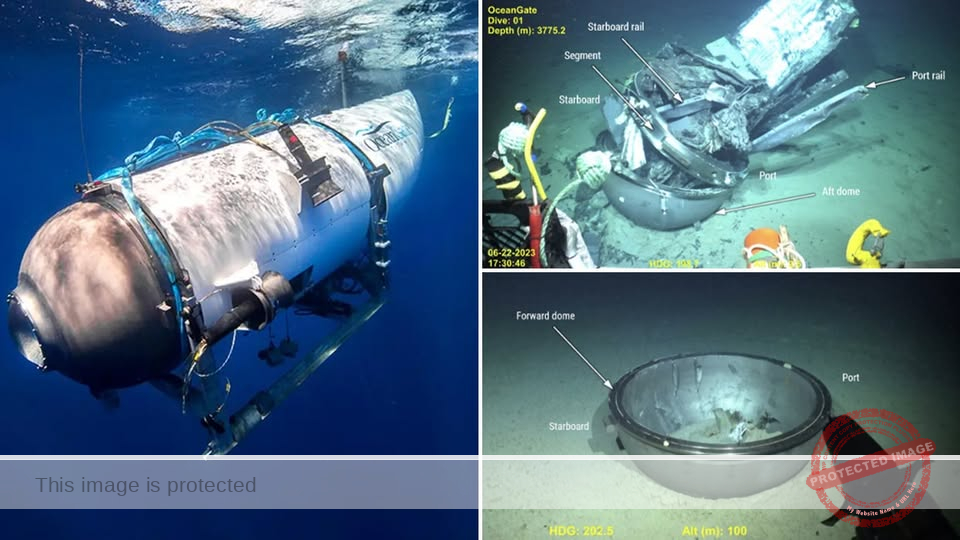
Washington, D.C. – October 16, 2025 – A new National Transportation Safety Board (NTSB) report has uncovered critical flaws in the design, testing, and operation of the Titan submersible, which imploded in 2023 near the Titanic wreck, killing all five occupants. The report highlights damaged carbon-fiber components, inadequate engineering, and overlooked safety warnings as key factors in the tragedy.
What Happened
The Titan, operated by OceanGate, suffered a catastrophic implosion during its dive 88 to the Titanic site in the North Atlantic Ocean. The NTSB report found that the vessel had sustained delamination damage during prior dives, specifically after dive 80, which progressively weakened the carbon-fiber pressure hull. Additional damage after dive 82 further compromised the structural integrity of the vessel.
The implosion was triggered by a local buckling failure in the damaged pressure vessel, causing instantaneous deaths of all five individuals on board. Real-time monitoring systems failed to alert engineers to the deteriorating hull, as sensors were misread or alarms dismissed.
Background of the Case
Titan was an experimental carbon-fiber submersible designed for deep-sea tourism and exploration. OceanGate’s CEO, Stockton Rush, who perished in the incident, oversaw a vessel that had not undergone adequate certification or strength testing. Earlier Coast Guard investigations had already identified signs of fatigue and structural issues, but the NTSB report now ties these problems directly to specific dives and material delaminations.
The tragedy has raised ongoing questions about the regulation of private deep-sea exploration, oversight of carbon-fiber composite vessels, and emergency response preparedness.
Investigation Details
The NTSB report focuses on technical specifics of Titan’s carbon-fiber hull failure. Layers within the hull had begun to separate, a process called delamination, which deteriorated over successive dives. OceanGate’s engineering processes failed to establish the true strength and durability of the vessel, leaving it vulnerable during dive 88.
The report also criticizes OceanGate’s emergency response procedures, noting that standard protocols could have expedited locating the wreckage, saving time and resources, though a rescue was ultimately impossible.
Public and Industry Reactions
The report has reignited scrutiny over private submersible operations. Industry experts and deep-sea safety advocates are calling for stricter regulations and oversight. Social media has amplified the discussion, with hashtags like #TitanSubmersible and #OceanGateSafety trending as communities and maritime professionals debate accountability and preventive measures.
“The physical failure of the Titan underscores the risks of experimental deep-sea exploration without rigorous testing,” said a maritime safety analyst. “This is a tragic reminder that lives depend on strict adherence to engineering and safety standards.”
Official Statements and Recommendations
The NTSB recommends a Coast Guard-led panel of deep-submersible experts to study current pressure-vessel operations and develop U.S. regulations for vessels carrying humans. Findings should be shared across the industry to prevent future incidents. The report emphasizes that existing regulations for small passenger vessels allowed OceanGate to operate the Titan unsafely.
The NTSB calls for dissemination of these findings to ensure private submersible operators adopt stricter safety measures, particularly as privately-funded exploration grows.
This story may be updated with more information as it becomes available.
