
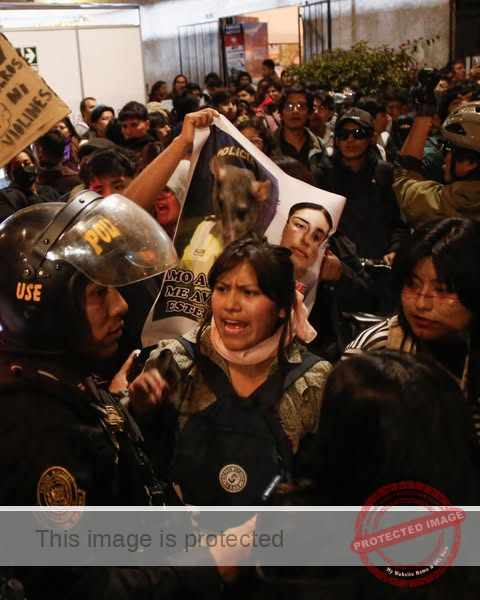
LIMA, Peru — Peru’s interim government announced on Thursday that it would declare a state of emergency in the capital, Lima, following a violent escalation in ongoing protests that have turned deadly. The demonstrations, initially sparked by grievances over low wages, corruption, and organized crime, have led to tragic clashes between anti-government protesters and police forces, leaving at least one person dead and over 100 injured.
The violence erupted in the heart of Lima on Wednesday, when protestors clashed with law enforcement, leading to the fatal shooting of a 32-year-old protester and hip-hop artist, Eduardo Ruiz. His tragic death has brought national attention to the protests, as well as calls for justice and accountability.
According to the Peru Prosecutor’s Office, Ruiz was fatally shot during the protest in the city center. Initial reports suggest that an officer fired in response to being physically attacked, but the circumstances surrounding the shooting remain under investigation. President José Jeri expressed regret over the incident and vowed that it would be “objectively” investigated.
The violence has escalated tensions across the country, especially after recent calls for the resignation of President Dina Boluarte, who was ousted from office by the Peruvian Congress in early December 2025. Her failure to combat organized crime and stabilize the country’s economy was a central issue in the protests. Her replacement, President José Jeri, has come under similar pressure to step down from the protesters. However, Jeri, who is only 38 years old, has refused to resign, stating on Thursday, “My responsibility is to maintain the stability of the country.”
In a statement to the press, President Jeri emphasized his commitment to improving public safety and promised to ask Congress for authority to legislate on public safety issues. Jeri’s government has repeatedly accused “delinquents” of infiltrating the protests to cause chaos, with the president vowing to apply “the full force of the law” to quell the unrest.
Despite these promises, the violence, which has now spread to multiple cities across the country, is a clear sign of the growing frustration among Peruvians over the political instability, corruption, and increasing crime. The death of Eduardo Ruiz, a figure celebrated for his music and activism, has amplified calls for reform and justice, and has brought the crisis to the attention of the international community.
On Thursday, a peaceful protest turned deadly when Ruiz, who had been actively participating in the demonstrations, was shot by a police officer. Witnesses described the situation as chaotic, with violent altercations between demonstrators and the police. Some 80 police officers have also been reported injured during the unrest.
The Peruvian government’s decision to declare a state of emergency underscores the severity of the ongoing political and social unrest. As investigations into Ruiz’s death continue, the public and international observers are calling for transparent legal proceedings, accountability, and an end to the violence that has gripped Peru’s streets.
This tragic incident, combined with the ongoing protests, is expected to lead to more national and international scrutiny, with the Peruvian government under increasing pressure to stabilize the nation and address the grievances of the public.
