
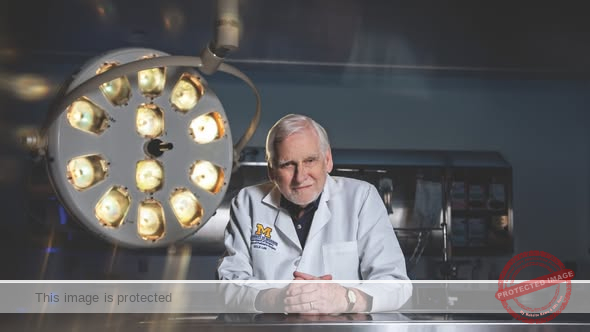
Dr. Robert H. Bartlett, M.D., an esteemed emeritus surgeon at Michigan Medicine and professor at the University of Michigan Medical School, passed away on October 20, 2025, at the age of 86 after a long illness. His pioneering career in critical care medicine and surgical innovation transformed the field, leaving a legacy that has saved countless lives globally.
What Happened
Dr. Robert H. Bartlett’s death marks the end of an extraordinary career that spanned decades of groundbreaking research and surgical achievements. As a leader in the field of critical care, his work revolutionized the use of extracorporeal membrane oxygenation (ECMO) technology, which has been vital in supporting patients with failing hearts and lungs. His career also extended beyond clinical practice, as he served as a mentor, published nearly 600 research papers, and co-founded the Extracorporeal Life Support Organization (ELSO), which supports ECMO usage worldwide.
Who Was Dr. Robert H. Bartlett
Born at University Hospital in Ann Arbor, Michigan, in 1939, Dr. Bartlett was the eldest of four children in a family deeply rooted in medicine. His father was a surgical resident at the University of Michigan. Dr. Bartlett’s education and training began in Michigan, earning his undergraduate degree at Albion College and his medical degree from the University of Michigan, graduating cum laude in 1963.
His journey as a physician and researcher took him to Harvard Medical School, where he pursued academic surgery. He went on to conduct groundbreaking work in the field of ECMO, leading his team to successfully use the technology on a newborn in 1976, marking the beginning of ECMO’s life-saving legacy.
Dr. Bartlett’s return to Michigan in 1980 saw him refine ECMO technology and explore innovations in artificial organs, which greatly impacted the transplantation field. Over the years, his research has saved thousands of critically ill patients and influenced medical care across the globe, including during the COVID-19 pandemic.
His Legacy and Contributions
Dr. Bartlett was not only an exceptional clinician and researcher but also a beloved mentor. His leadership extended to roles as the chief of general surgery, director of the Surgical ICU, and chief of Trauma/Critical Care at Michigan Medicine. His contributions to science were coupled with an enduring curiosity and optimism that inspired generations of students and colleagues.
His professional accomplishments are matched by his dedication to the arts and community life. He was an avid musician and co-founded the Life Sciences Orchestra at the University of Michigan. He also remained an active member of the Ann Arbor Civic Band and was a passionate hockey fan.
Survivors and Family Tributes
Dr. Bartlett is survived by his wife, Wanda Bartlett; his children, Karl, Keith, and Karen Fischer; his siblings, Bruce and Beth Bartlett; his grandchildren, Sam, Helen, Jason, and Samantha; and an extended family of nieces, nephews, and grandnieces and nephews. His family and the many people who benefited from his work remember him not only for his professional excellence but also for his generous spirit, boundless curiosity, and dedication to making the world a better place.
Community Reaction
Dr. Bartlett’s death has sparked an outpouring of tributes from colleagues, students, and patients who have been profoundly impacted by his work. Justin Dimick, M.D., chair of the University of Michigan’s Department of Surgery, described Dr. Bartlett as an inspiring figure who influenced countless students and researchers.
Closing line:
This story may be updated with more information as it becomes available. Dr. Robert H. Bartlett’s legacy lives on in the lives he saved, the innovations he pioneered, and the numerous people he mentored throughout his distinguished career. His contributions to medicine will continue to impact future generations.
