
Belfast, Northern Ireland – October 23, 2025 — Former paratrooper Soldier F has been found not guilty of all charges related to the shootings on Bloody Sunday in January 1972, where 13 civilians were killed by British soldiers during a civil rights march in Derry. The ruling was delivered today in Belfast Crown Court by Judge Patrick Lynch, marking the end of a high-profile legal battle that has lasted for decades.
What Happened
Soldier F was accused of murdering James Wray and William McKinney and attempting to murder five others during the Bloody Sunday massacre. However, after a four-week trial, Judge Lynch determined that the evidence presented by the prosecution fell well short of the required standard to secure a conviction. The judge stated that the testimonies of two former soldiers, Soldiers G and H, were not reliable enough to prove that Soldier F had committed the alleged acts with intent.
Lynch expressed that “the evidence presented by the Crown fell well short” of the high standard of proof required in a criminal case, citing issues with hearsay and the inability to test the credibility of witness statements. As a result, Soldier F was acquitted of all charges, leading to a subdued reaction in the court.
Who Was Soldier F?
The identity of Soldier F, who had been involved in the tragic events of Bloody Sunday, was kept concealed throughout the trial. Soldier F had been accused of opening fire on unarmed civil rights demonstrators, resulting in multiple deaths and injuries. The case revolved around whether Soldier F acted with the intent to kill or whether the events had been distorted by the passage of time and inconsistent testimonies from other soldiers.
In 1972, British paratroopers were deployed to disperse a peaceful march in Derry, but the operation turned deadly, with 13 civilians losing their lives, and many more injured. This incident became one of the darkest chapters in the Troubles, a violent period of conflict in Northern Ireland, and has remained a point of contention for the families of the victims, the public, and the British army.
Public and Social Media Reactions
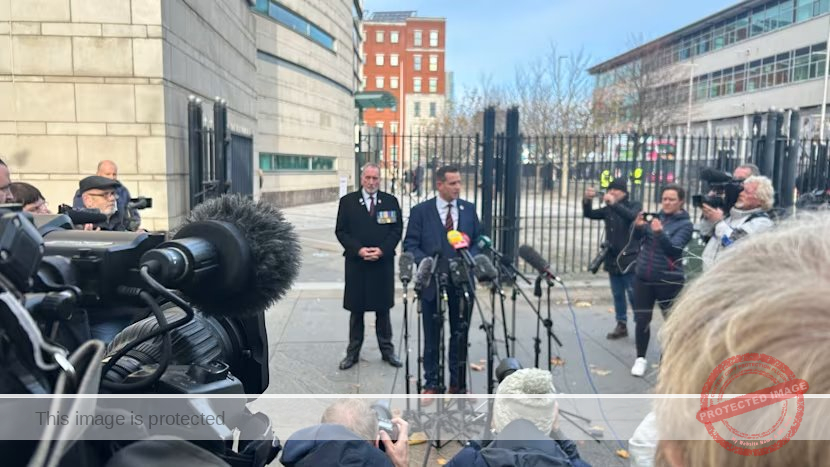
The verdict has sparked a mixed response from the public, with families of the victims expressing profound disappointment. Mickey McKinney, representing the families of the Bloody Sunday victims, stated that “today marks the end of the prosecution of Soldier F for the murder and attempted murder” and blamed the British state for the lack of justice. McKinney criticized the Royal Ulster Constabulary (RUC) for not properly investigating the incident and the British Army for shielding its soldiers.
On the other hand, David Johnstone, the Northern Ireland Veterans’ Commissioner, welcomed the decision and emphasized the need for “a fair and balanced approach” in handling legacy cases like this.
Official Statements and What Happens Next
The Director of Public Prosecutions, Stephen Herron, acknowledged the acquittal of Soldier F, stating that the legal process had been conducted independently and impartially. Herron recognized the challenges faced in prosecuting legacy cases, particularly those involving military personnel and historical incidents.
The Public Prosecution Service (PPS) confirmed that Soldier F was cleared of all charges after considering the complexity of the case and the difficulties surrounding witness testimonies from the time of the incident. Herron added that “all decision-making in this case was conducted independently and impartially.”
The UK Government has issued a statement expressing its commitment to finding a way forward that “acknowledges the past” while supporting those who served their country during the conflict in Northern Ireland.
Closing Thoughts
The judgment marks a significant moment in the ongoing Bloody Sunday saga, highlighting the continued division and tension surrounding the events of 1972. For the families of those killed and injured on that day, the legal process has been a painful journey, and today’s outcome raises questions about the pursuit of justice for historical atrocities in Northern Ireland.
As Soldier F walks free, the wider community will continue to grapple with the complex legacy of the Troubles. The challenge of reconciling historical grievances and seeking justice for past wrongs remains a sensitive issue for many in the region.
This story may be updated with more information as it becomes available.
