
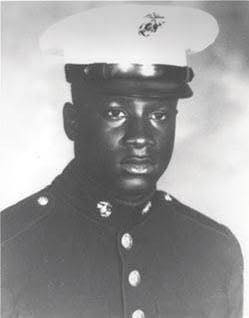
On March 5, 1969, Private First Class Robert H. Jenkins, Jr. made the ultimate sacrifice during the Vietnam War while serving with Company C, Third Reconnaissance Battalion, Third Marine Division. For his extraordinary acts of valor, Jenkins posthumously received the Medal of Honor, the nation’s highest military honor, recognizing his gallantry beyond the call of duty.
What Happened
On the morning of March 5, 1969, during a reconnaissance mission in Fire Support Base Argonne, located south of the Demilitarized Zone (DMZ) in Vietnam, PFC Jenkins and his twelve-man team were ambushed by a North Vietnamese Army (NVA) Platoon. The enemy forces attacked with mortars, automatic weapons, and hand grenades, launching a devastating assault on the position held by Jenkins and his comrades.
In the heat of battle, Jenkins reacted immediately, moving with another Marine to a two-man fighting emplacement to provide machine gun fire against the advancing enemy. As they courageously fought back, an NVA soldier threw a hand grenade into their emplacement. Understanding the imminent danger, PFC Jenkins made a split-second decision that would ultimately cost him his life. He threw himself on top of his fellow Marine to shield him from the blast, sacrificing his own life to save another.
Despite being severely wounded by the explosion, Jenkins’ selflessness ensured his comrade’s survival. Jenkins later succumbed to his injuries, but his heroic actions left a legacy that would inspire future generations of Marines and service members. His courage exemplified the very best of the Marine Corps and the United States military.
Who Was Robert H. Jenkins, Jr. / Background of the Case
Born on August 18, 1947, in New York City, Robert H. Jenkins, Jr. grew up with a sense of duty and service, ultimately enlisting in the U.S. Marine Corps in 1968. A year later, he found himself in the midst of the Vietnam War, a conflict that would become one of the most defining chapters in U.S. military history.
Jenkins was a part of the Third Reconnaissance Battalion, tasked with gathering intelligence in hostile territories. His bravery and leadership skills stood out even before the events of March 5, 1969, and he was widely respected by his fellow Marines. His commitment to his comrades was unwavering, and his devotion to duty became evident during the ambush at Fire Support Base Argonne, where he would ultimately give his life for the safety of others.
Career, Legacy, or Case Details
PFC Jenkins’ selfless act on March 5, 1969, was recognized by the U.S. Congress, and he was posthumously awarded the Medal of Honor, the highest decoration for valor in the U.S. military. His citation described his actions as “conspicuous gallantry and intrepidity at the risk of his life above and beyond the call of duty.” Jenkins’ bravery saved his fellow Marine’s life and embodied the core values of the United States Marine Corps: honor, courage, and commitment.
Though Jenkins did not live to see the recognition of his bravery, his name and his actions are forever etched in military history. His legacy continues to inspire new generations of military personnel to uphold the highest standards of service and sacrifice.
Public and Social Media Reactions
The passing of PFC Jenkins was mourned by his fellow Marines and members of the military community, who have consistently celebrated his heroism. His story serves as a reminder of the sacrifices made by so many during the Vietnam War and beyond. Veterans’ organizations and military units often hold memorial services in his honor, reflecting on his actions and the sacrifices of countless others who served during that turbulent time.
Official Statements or What Happens Next
In recognizing his actions, Congress posthumously awarded Jenkins the Medal of Honor, and the U.S. military continues to honor his memory with memorials and tributes to his extraordinary courage. His family, while forever grieving the loss of their beloved son, continues to support the veterans’ community and champion the cause of those who have made similar sacrifices.
In remembering PFC Robert H. Jenkins, Jr., we are reminded of the cost of freedom and the bravery required to protect it. Jenkins’ story endures as an example of valor, selflessness, and patriotism.
This story may be updated with more information as it becomes available.
