
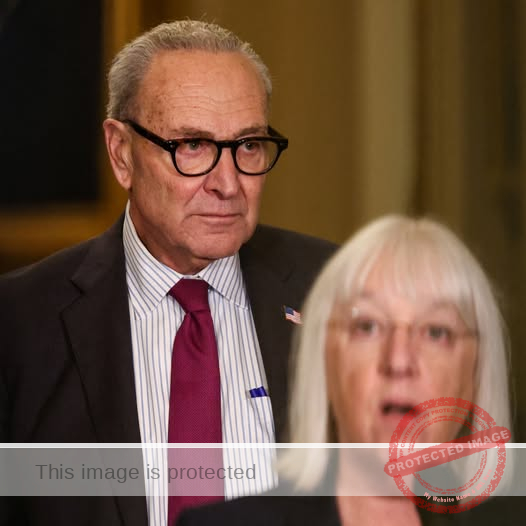
Washington, D.C. — On Tuesday, Senate Democrats once again blocked Republicans’ efforts to reopen the government, preventing Senate Majority Leader John Thune’s 13th attempt to advance the House-passed continuing resolution (CR). The continuing shutdown enters its 28th day, with critical deadlines rapidly approaching, putting additional pressure on lawmakers to reach an agreement.
What Happened
The standoff continued after Thune, a Republican from South Dakota, tried to push forward a bill passed by the House of Representatives to fund the government temporarily. However, Senate Minority Leader Chuck Schumer, D-N.Y., along with other Democratic senators, blocked the motion, making it clear that Democrats would not support the current proposal.
As the impasse continues, key issues have begun to surface. The first payday for air traffic controllers came and went without payment, and the military is set to miss its first full payday on Friday. Federal nutrition benefits under the Supplemental Nutrition Assistance Program (SNAP), commonly known as food stamps, are also in jeopardy, with benefits set to expire on Saturday — the same day that open enrollment for Obamacare starts.
This latest failure to advance legislation has intensified concerns that critical programs could be indefinitely stalled if a resolution is not reached soon.
The Push for “Rifle Shots” Bills
While Senate Republicans have repeatedly failed to push through the House-passed CR, some GOP members are pushing for piecemeal “rifle shots” — individual bills to address specific parts of the federal workforce, including paying troops, air traffic controllers, and federal workers. However, Senate Majority Leader Thune has expressed doubts about such measures.
“There’s not a high level of interest in doing carve-outs or so-called rifle shots,” Thune said. “Most people recognize the way to get out of this mess is to open up the government.”
Despite Thune’s reluctance, senators such as Ted Cruz (R-Texas) and Ron Johnson (R-Wis.) are hopeful that their individual bills might still get a chance to be heard. Cruz is pushing for legislation to pay air traffic controllers, and Johnson is advocating for a bill to pay federal workers and the military. Johnson has indicated that discussions with Sen. Chris Van Hollen (D-Md.) are ongoing to create a compromise version of his bill. However, he remained pessimistic about its chances, even after agreeing to some Democratic concessions.
“I want to make this permanent,” Johnson said. “Let’s stop, again, let’s take the ability to punish federal employees because of our dysfunction away forever.”
Schumer Blames Trump and GOP Leadership
In the run-up to the vote, Schumer was vocal in his criticism of Republican leadership, especially President Donald Trump’s absence during this critical moment in the negotiations. Schumer suggested that Trump’s overseas travel was exacerbating the lack of progress in reopening the government.
He also criticized Thune for once again bringing the same bill to the floor, reiterating that Democrats’ demands for an extension of expiring Obamacare subsidies remained unchanged. “It’s a partisan bill and does nothing, most importantly, does nothing to solve the [Obamacare] crisis,” Schumer stated.
Schumer emphasized that Democrats are not only fighting for a solution to the government shutdown but also for the issues that affect everyday Americans, including lower healthcare costs. According to Schumer, nearly 60% of Americans — including many MAGA voters — support efforts to reduce healthcare expenses.
“The vast majority of Americans want lower healthcare costs now,” Schumer said, underscoring the urgency of the situation.
What’s Next
As the gridlock continues, both parties remain at an impasse. With the end of the month fast approaching, lawmakers will have to find a resolution soon to prevent further disruptions to government services.
The deadline to prevent cuts to SNAP benefits looms, and the growing concerns over missed paychecks for federal workers and service members only increase the pressure on negotiators. Will Republicans concede to Democratic demands for a comprehensive deal, or will the GOP continue pushing for smaller, more targeted bills? The coming days will be crucial in determining whether a broader deal can be reached or if the country will face further prolonged disruptions.
This story may be updated with more information as it becomes available.
