
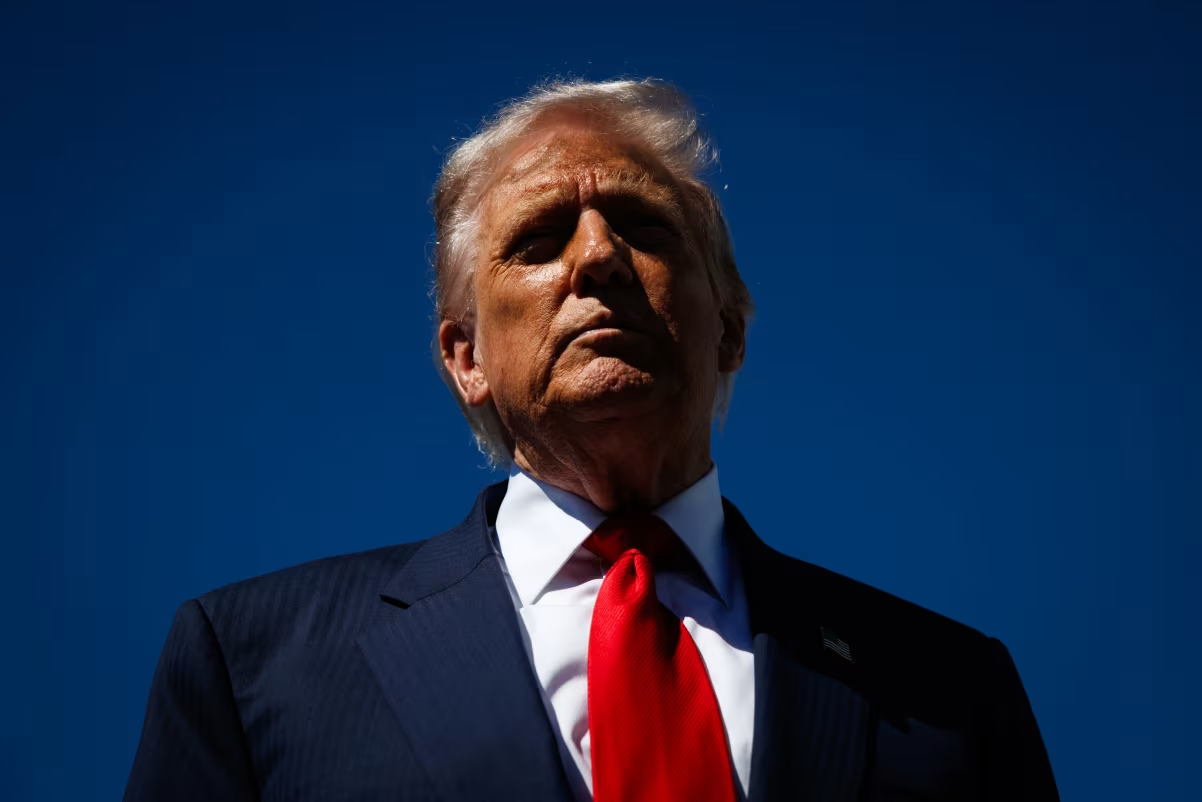
U.S. President Donald Trump has ordered the Defense Department to prepare for potential military action in Nigeria, following accusations of violence against Christians in the country. Trump’s strong rhetoric and decision to cut off aid to Nigeria has sparked significant international debate and condemnation from the Nigerian government.
What Happened:
On Saturday, October 31, 2025, President Trump took to social media to accuse Nigeria’s government of being complicit in the “mass slaughter” of Christians, a claim that Nigeria has repeatedly denied. In his post, Trump threatened to stop all U.S. aid to Nigeria, stating that the U.S. might take military action to eliminate the “Islamic Terrorists” responsible for these atrocities.
“I am hereby instructing our Department of War to prepare for possible action,” Trump wrote, adding that if the U.S. intervened, it would be swift and decisive. The U.S. Secretary of Defense, Pete Hegseth, also posted in support of Trump’s comments, saying that the Department of War was ready to take action if Nigeria failed to protect its Christian population from violence.
Nigerian Government’s Response:
In response, Nigerian President Bola Ahmed Tinubu rejected the accusation, asserting that the U.S. characterization of Nigeria as religiously intolerant did not reflect the reality of the country. “The killing of innocent Christians in Nigeria — and anywhere — must end immediately,” Tinubu’s spokesperson Bayo Onanuga said. “What our country requires from America is military support to fight these violent extremists in some states of our country, not designation as a nation of particular concern.”
Tinubu’s office also emphasized that Nigeria has been working with the U.S. government and international partners to protect communities of all faiths, calling the accusation of religious persecution a “gross exaggeration.”
Context and Background:
The violence in Nigeria is complex, involving religious, ethnic, and resource-related conflicts. While Christians have been among those targeted by extremist groups, most of the violence has affected Muslims, particularly in Nigeria’s predominantly Muslim northern regions. The violence is driven by multiple factors, including disputes between farmers and herders, communal tensions, and radical Islamist extremism.
Trump’s comments followed a designation by his administration of Nigeria as a “Country of Particular Concern” under the International Religious Freedom Act, which suggests that the U.S. government believes Nigeria has engaged in or tolerated serious and ongoing religious freedom violations.
Global and Domestic Reactions:
The situation has ignited discussions on both sides of the Atlantic. Human rights groups and some political leaders have supported Trump’s stance, highlighting the severity of religious violence in Nigeria. However, Nigerian officials argue that the focus should be on strengthening military cooperation against extremists, rather than punitive measures like the U.S. designation.
As tensions rise, both the U.S. and Nigerian governments continue to navigate the complex issues of religious violence, human rights, and international cooperation.
Closing Line:
This developing situation continues to unfold, with diplomatic and military efforts likely to shape future relations between the U.S. and Nigeria. Further updates are expected as the situation progresses and additional details emerge.
