
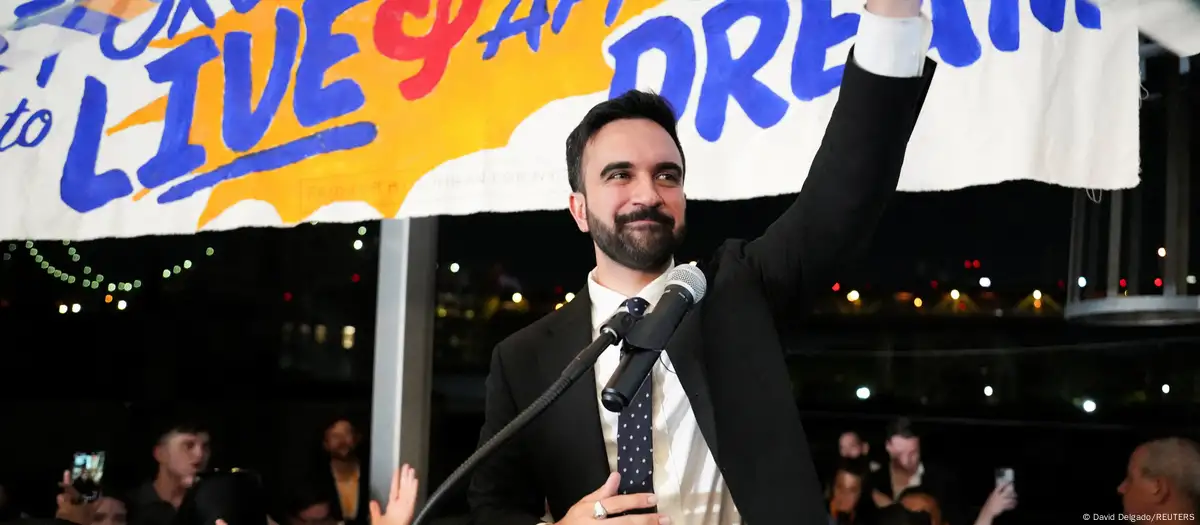
Zohran Mamdani, the 34-year-old Democratic Socialist and current New York Assemblyman, is poised to become the next mayor of New York City, an outcome few could have predicted a year ago. As the race heads into the final stretch, Mamdani is the overwhelming favorite after a surprising victory over former Governor Andrew Cuomo and Republican nominee Curtis Sliwa in the Democratic nomination.
What Happened?
Mamdani’s mayoral bid has captivated the city, especially with his progressive policies focusing on issues like affordable housing, higher corporate taxes, and social welfare. Born to Ugandan and Indian immigrant parents, Mamdani’s personal story has resonated with many in New York’s diverse electorate, fueling his rapid political rise.
Despite his outsider status just a year ago, Mamdani is now set to make history as New York City’s next mayor. His impressive victory over Cuomo in the Democratic primary solidified his position as the front-runner. The election is set to conclude on November 4, 2025, and the city is eagerly awaiting the results.
Who is Zohran Mamdani?
Zohran Mamdani was born in Uganda and moved to New York at the age of seven with his family, where he grew up in a predominantly immigrant community. Mamdani has described his upbringing as “privileged,” though not typical of most New Yorkers. He worked in various capacities before being elected to the New York Assembly in 2020, where his focus on housing affordability and fighting eviction quickly earned him recognition.
Mamdani’s father, Mahmood Mamdani, is a prominent academic, and his mother, Mira Nair, is a renowned filmmaker. His deep ties to the community and immigrant heritage have shaped his identity and his political platform, which emphasizes the need for radical change, especially in a city grappling with affordability issues.
Mamdani’s supporters value his authenticity and his focus on policies that challenge the status quo, particularly his calls to freeze rents on stabilized units and raise taxes on high earners.
What Are Mamdani’s Policies and Principles?
Mamdani’s platform is driven by a commitment to combating income inequality and providing affordable housing for New Yorkers. As the city faces soaring rent prices, with the average three-bedroom apartment costing over $8,500 per month, Mamdani has called for significant reforms. His proposal to freeze rents, impose a flat 2% tax on those earning more than $1 million annually, and increase public investment in housing has struck a chord with many voters.
In addition to housing, Mamdani has advocated for higher minimum wages, universal child care, and free public transportation. His membership in the Democratic Socialists of America (DSA) reflects his commitment to a more equitable and progressive society, though it has made him a polarizing figure in New York politics.
Mamdani’s stance on Palestinian rights has also garnered attention, with some critics questioning his position within New York’s Jewish community. However, Mamdani has emphasized his commitment to addressing the root causes of inequality both in the U.S. and abroad.
What Do His Critics Say About Mamdani?
Mamdani’s bold policies have not come without their detractors. Some argue that his socialist principles may be too far left for mainstream voters in New York City, despite the city’s progressive reputation. His supporters within the business community, including high-profile figures like Bill Ackman, have expressed concern that his proposed tax hikes and anti-business rhetoric could harm New York’s economy and job market.
Mamdani’s long-term support for Palestinian rights, while praised by some, has been criticized by others. Rabbi Elliot Cosgrove, of the Park Avenue Synagogue, voiced concern about his stance, stating that Mamdani poses a “danger to the New York Jewish community.” However, not all Jewish community members share this sentiment, and many New Yorkers have rallied behind him for his stance on broader social justice issues.
The Role of New York Mayor
The position of New York City mayor holds immense influence, not just in local governance but on the national and global stage. With a population of over 8 million, New York is a cultural and financial hub, facing major challenges like housing affordability, crime reduction, and sustainable infrastructure. The mayor’s office controls a $116 billion budget, overseeing everything from education to public safety.
Mamdani’s approach to governance has raised concerns among his critics, especially his left-wing policies and his outspoken criticism of corporate interests. However, supporters argue that his vision for a fairer city will address the deep inequities facing everyday New Yorkers.
Public Reactions and Media Coverage
The race for New York mayor has become a focal point for both local and national media. The city’s political establishment has been divided, with many praising Mamdani’s energy and vision, while others express skepticism about his ability to lead a city of New York’s size and complexity.
Prime Minister Keir Starmer and other political figures have commented on the upcoming election, with Starmer emphasizing the importance of addressing both local and global issues. Mamdani, who has already clashed with Donald Trump over their opposing views on governance, has been vocal about his desire to confront political adversaries head-on.
What Happens Next?
As the election nears, Mamdani remains the favorite, with recent polls showing strong support for his progressive policies. However, with multiple candidates still in the race, including former Governor Andrew Cuomo, the outcome is still uncertain. As the race reaches its conclusion on November 4, 2025, all eyes are on New York City and its potential new leader.
This story may be updated with more information as it becomes available.
