
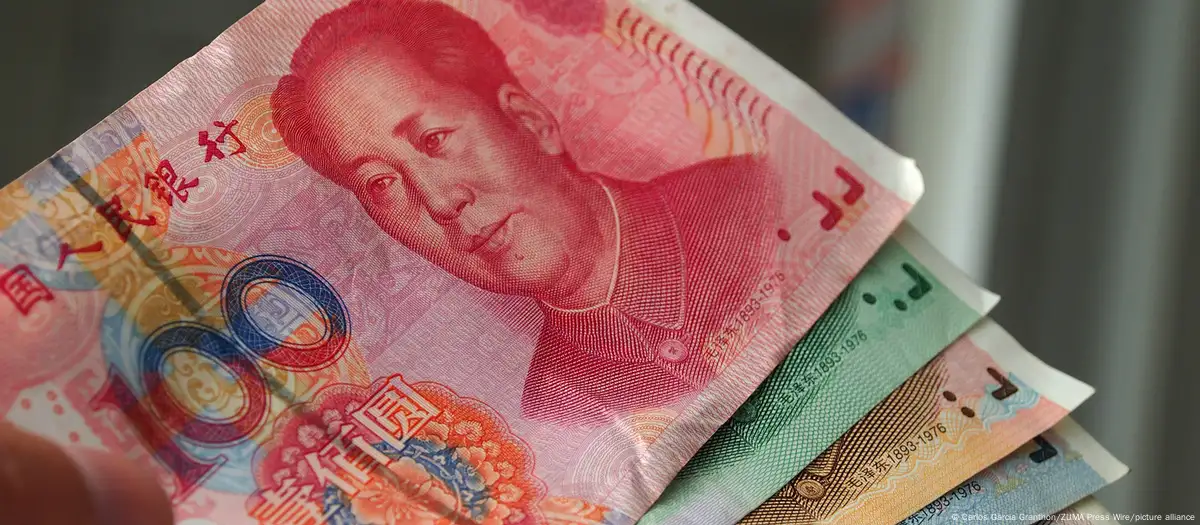
As China continues its quest to reduce reliance on the US dollar, recent data highlights the growing role of the yuan in global trade and finance. Despite challenges, Beijing’s strategy aims to shift the balance of power in international trade, making the yuan a central player on the global stage.
What Happened
China’s efforts to reduce its dependency on the US dollar took a significant step forward in 2023. Following the 2008 financial crisis, Beijing launched an initiative to internationalize the yuan. By 2023, the yuan accounted for more than 30% of China’s $6.2 trillion global trade in goods. With increasing global adoption, the yuan briefly overtook the euro as the second-most used currency in global trade finance. The Chinese central bank’s deputy governor, Zhu Hexin, confirmed this milestone in June 2023.
China’s drive to use the yuan for trade settlements accelerated during the ongoing geopolitical tensions, especially following the Russian invasion of Ukraine. China’s relationship with Russia and other countries in the Global South has further pushed yuan-based transactions for energy deals, with countries like Russia, Iran, and Argentina seeking alternatives to the US dollar for trade.
Who Was Behind China’s Push for Yuan Internationalization / Background of the Initiative
China’s gradual strategy for yuan internationalization, dubbed “regionalization,” aims to solidify the yuan’s role in the Global South, especially with countries involved in the Belt and Road Initiative (BRI). While Beijing has pushed for the use of the yuan in trade agreements, it has steered clear of fully liberalizing the currency. Beijing has made clear that it’s more interested in the yuan being used in global trade than as a free-floating financial currency for investments and capital markets.
By 2023, the yuan had become the second-most used currency in global trade finance, though it still lags far behind the US dollar. The yuan’s share of global currency reserves also reached an all-time high of 2.4%, according to the International Monetary Fund (IMF).
Career, Legacy, or Case Details / The Rise of the Yuan
China’s global strategy has used several key mechanisms to support the yuan’s rise. From entering trade agreements to securing debt financing deals, China has steadily embedded the yuan in global financial structures. Notably, China’s Cross-Border Interbank Payment System (CIPS) provides an alternative to the US-dominated SWIFT system, enabling international transactions in yuan.
Moreover, Beijing has introduced the digital yuan (CBDC), which is expected to revolutionize cross-border payments. Its potential for streamlining transactions is evident, with over 20 countries already participating in its pilot phase.
A second pillar supporting yuan internationalization is China’s expanding lending to developing nations. Countries like Kenya, Angola, and Indonesia are increasingly issuing yuan-denominated bonds and converting dollar debts into yuan, benefiting from the Chinese government’s lower interest rates compared to the US dollar.
Public and Social Media Reactions
The push for yuan dominance has sparked mixed reactions. Supporters argue that it’s a necessary step for China to protect its economy and reduce the leverage of the US dollar in global trade. Economists and analysts, such as Miguel Otero-Iglesias, suggest that China’s methodical approach avoids excessive risk and ensures that the yuan aligns with Beijing’s long-term strategy.
On the other hand, critics of yuan internationalization question whether China’s tightly controlled economy can ever allow the yuan to fully replace the US dollar, given Beijing’s reluctance to open up capital markets and give up control over its credit system.
Social media debates are ongoing, with many users in developing countries expressing interest in alternatives to the US dollar, while some Western financial analysts remain skeptical of the yuan’s true potential.
Official Statements or What Happens Next
China’s Ministry of Finance continues to push for further integration of the yuan in global finance, especially through new partnerships and digital currency integration. The yuan’s use in energy deals has expanded, with Chinese companies increasingly demanding payments in yuan from their trading partners, particularly in the energy and commodity sectors.
In terms of official government policy, Beijing has not made significant moves to entirely liberalize the yuan, which remains heavily controlled by the Chinese Communist Party. Analysts suggest that full convertibility will be necessary for the yuan to fully challenge the dollar’s dominance, but with the current political climate, that remains unlikely.
Closing line:
This story may be updated with more information as it becomes available.
