
Over the past few weeks, our journey through the UK has shed light on the deepening divisions within the country. From Blackpool to Wolverhampton, and now Stanwell, we have witnessed the escalating tensions surrounding migration, asylum seekers, and their impact on communities. The stories shared have revealed a stark contrast between the struggles of local populations and the challenges of migration, highlighting the frustrations and fears that are festering at the heart of many communities.
What Happened in Stanwell?
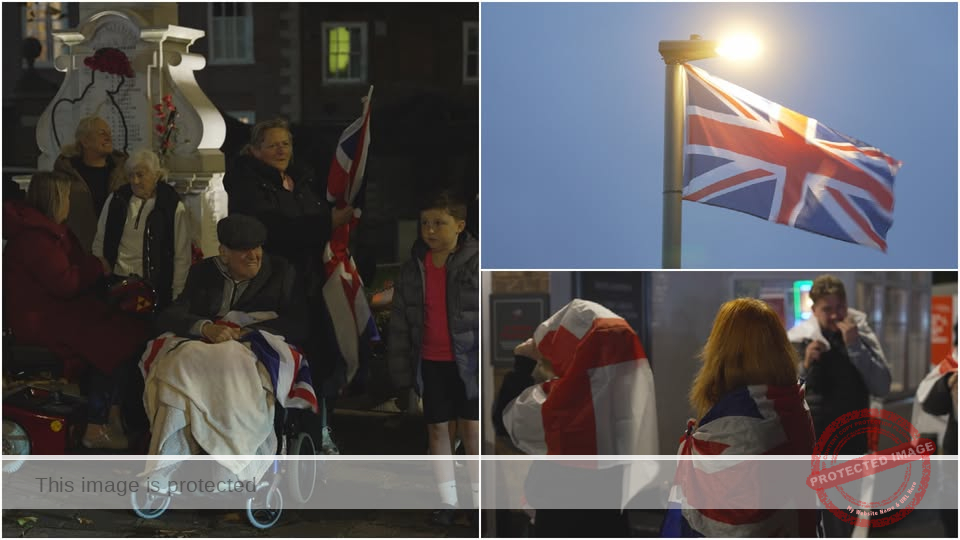
This week, we visited the village of Stanwell, where a hotel continues to house single male asylum seekers despite ongoing protests from local residents. For over a hundred consecutive nights, the protests have escalated, with many of the demonstrators voicing concerns about the presence of asylum seekers in the community.
Among the protesters was a young girl who expressed her growing fear. “It really makes me scared because my mum tells me I’m not allowed to walk on the streets anymore because of the men in there,” she told ITV News. Her words echoed the anxiety felt by many residents, especially those with children. However, there was also a counter-narrative, with residents like her clarifying that their concerns were not rooted in racism. “I have loads of friends of different races. If this were racist, I wouldn’t be standing here right now,” the girl explained.
The village of Stanwell, known for its thriving, ethnically diverse community, seems to be grappling with a complicated issue where concerns about safety and resources are fueling tensions, rather than racial animosity.
Racially Motivated Violence in Wolverhampton
Earlier in our journey, we visited Wolverhampton, where racially motivated violence has once again instilled fear in the local community. The challenges of living in a diverse area, coupled with the anxiety around migration, have led to a sense of instability. This situation is further compounded by the rising number of asylum seekers and the political rhetoric surrounding immigration, which is being manipulated by some extremist groups.
Nigel Bromage from Exit Hate, an organization focused on re-educating young people who have fallen prey to the far right, expressed growing concern over the radicalization of young people. He observed, “I’m more worried now than I have ever been about extremism.” This extremism, fueled by migration-related fears, is making its way into the online world, where young people are increasingly exposed to far-right ideologies.
The Migration Crisis: Stats and Stories
According to recent data, the UK is facing an unprecedented number of asylum applications. In the year to June 2025, 111,084 people applied for asylum in the UK, marking a 14% increase from the previous year. The majority of these applicants hail from countries like Pakistan, Afghanistan, Iran, Eritrea, and Bangladesh, with these five nations accounting for 37% of all asylum claims.
While irregular routes remain the most common way for individuals to seek asylum, the number of people arriving via visas or other forms of legal entry has tripled since 2022. The increase in asylum seekers has caused rising tension, particularly amid the ongoing cost-of-living crisis, which has exacerbated feelings of frustration and fear.
Public Reactions and the Threat of Extremism
The rise in asylum claims and the tension surrounding immigration has given rise to an alarming trend: a growing number of young people are being drawn into far-right extremist ideologies. The protests we witnessed are providing fodder for far-right activists, who are taking advantage of the public’s fears to recruit new members.
As Bromage pointed out, “If somebody knocked on your door and he had a swastika arm-band on, and you had a son and daughter upstairs, you’d never let them in to talk to them. But because many parents don’t know what their children are looking at online, that’s exactly what’s happening.” This alarming trend highlights the importance of addressing the root causes of radicalization, as well as increasing awareness of online extremism.
The Youth Speak: A Generation’s Call for Unity
At a school in Solihull, we gathered a group of students to discuss the aftermath of the summer’s protests. Despite the tensions that have defined the public debate, the students’ responses were thoughtful and, in some ways, reassuring. “I feel like the flag represents everyone and is supposed to be uniting,” said one sixth-form student, while another remarked, “We need to learn to be tolerant of each other.”
These young voices offer hope for the future, showing that there are still many who believe in unity, tolerance, and understanding, despite the current climate of division.
Government Response and the Future
The UK government, led by Prime Minister Rishi Sunak’s Labour Party, has promised to take action to close asylum hotels and introduce stricter immigration policies. On Monday, new immigration rules are expected to be introduced, which will focus on limiting the numbers of asylum seekers and addressing the housing crisis associated with the increasing number of arrivals.
However, even if these measures are successful, the underlying issues of identity, integration, and community cohesion will remain. This is where the next generation will play a critical role in shaping the future of the UK. As the country grapples with its migration crisis, it is clear that a lasting solution will require cooperation across political, social, and cultural lines.
Closing Thought:
As the UK faces these challenges, it is evident that the future lies in the hands of a new generation—one that must find the answers to questions of identity, community, and unity. While the tensions over immigration and asylum continue to rise, the hope remains that through dialogue, understanding, and compassion, the nation can find a way to move forward together.
This story may be updated with more information as it becomes available.
