
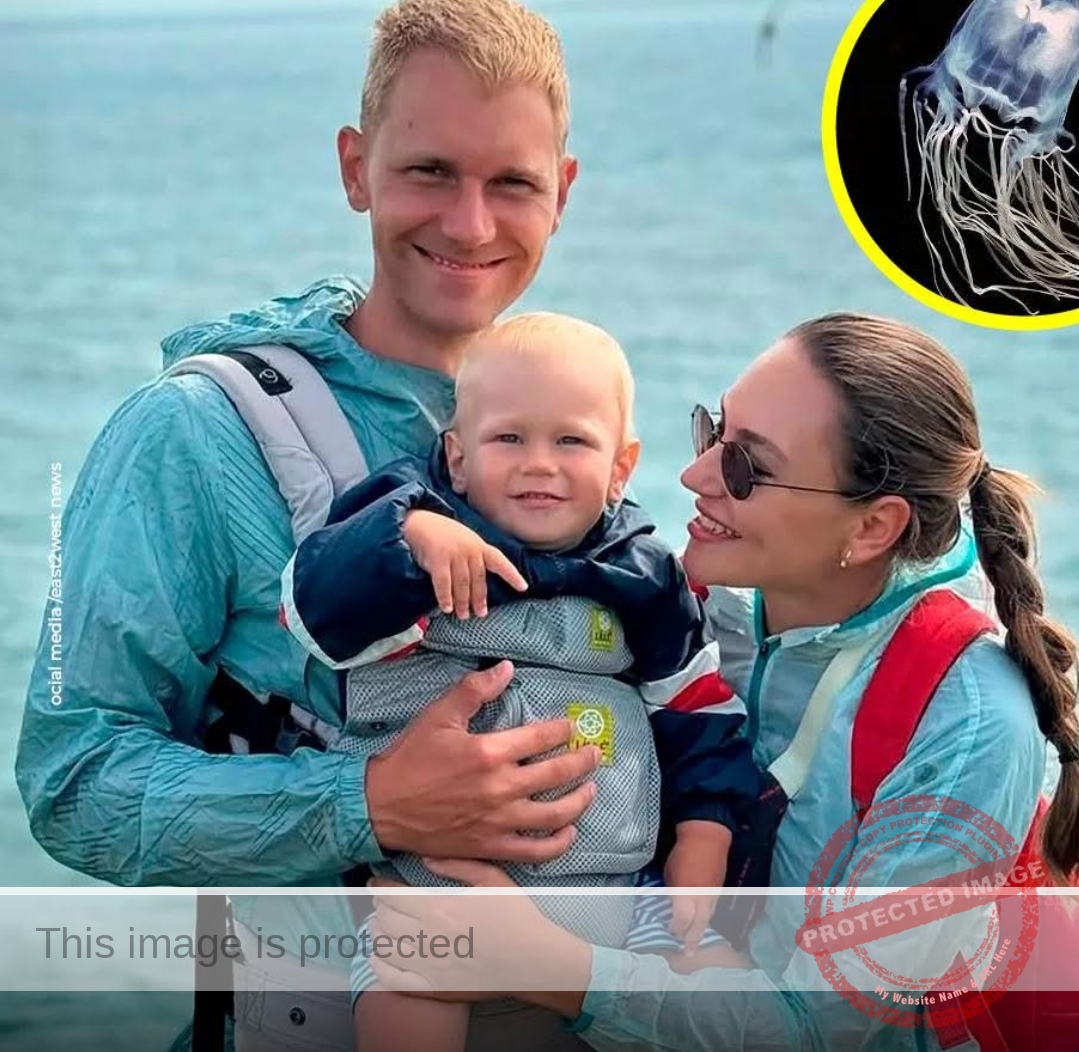
The joyful holiday of a Russian family on the picturesque island of Langkawi, Malaysia, turned to unimaginable tragedy on November 15, 2025, when their two-year-old son, Vladimir Iakubanets (also spelled “Vladimir Yukabanets”), succumbed to a fatal box jellyfish sting while playing in the shallow waters of Pantai Cenang.
What Happened: A Day of Tragedy on Langkawi
The family had been enjoying their first visit to Malaysia when disaster struck. At approximately 11:15 AM, little Vladimir was playing in the shallow waters near the shore when he was stung by the deadly marine creature. According to his father, Nikita, the child immediately cried out and collapsed. “My wife took him out of the water and handed him to me… within seconds, he stopped breathing,” Nikita recalled.
Despite quick intervention from beach responders, who washed the wound with vinegar—a standard measure to neutralize the venom of a jellyfish sting—Vladimir’s condition worsened. He was rushed to a local clinic before being transferred to a hospital on the mainland, Hospital Sultanah Bahiyah in Alor Setar. Medical staff managed to briefly revive him, but tragically, Vladimir succumbed to complications from the sting and passed away on November 19, 2025.
Who Was Vladimir Iakubanets: A Bright Young Life Cut Short
Vladimir, aged just two, was the beloved son of Nikita and Olga Iakubanets. Known for his kindness and intelligence, he was affectionately remembered by his parents as their “little angel.”
The couple has expressed their immense grief but also a desire for their son’s death to carry a greater purpose. In a heartfelt statement, his father Nikita said, “We believe this was the purpose of his life — to save others, to prevent future tragedies.”
Though the tragedy was deeply personal, the family’s wish is that Vladimir’s death might serve as a warning and prevent similar accidents in the future. They plan to cremate their son and return his ashes to Russia.
The Deadly Threat of Box Jellyfish
Box jellyfish are notorious for being one of the most venomous creatures in the ocean, capable of causing excruciating pain, paralysis, respiratory failure, and even death in just minutes. Fatalities from box jellyfish stings are rare but not impossible, especially in tropical regions like Malaysia, where the creatures are common in coastal waters.
In light of the incident, officials from the Kedah Fisheries Department confirmed that box jellyfish were present in Langkawi’s waters and warned of the significant danger they pose to swimmers. While jellyfish counts remain moderate, even a small presence is enough to cause a deadly sting.
Family’s Response and Calls for Improved Safety
In the wake of the tragedy, the Iakubanets family has raised concerns over the safety measures in place at the beach. Nikita stated that he was “taken aback” by the limited first-aid response, as the initial treatment of vinegar was the only intervention provided before medical assistance arrived. Additionally, the family highlighted that antivenom had to be sourced from Penang, causing a delay in critical treatment.
The family has also criticized the lack of sufficient resources and awareness about jellyfish dangers in tourist destinations. “They should improve beach safety because deaths like this must be prevented,” Nikita stressed. The Kedah authorities are currently investigating the incident and are considering implementing improved safety measures, including better beach signage, enhanced first-aid equipment, and a faster supply of antivenom.
Broader Implications: Awareness and Prevention
This heartbreaking event serves as a stark reminder of the dangers that can lurk in the ocean, even in seemingly safe, shallow waters. It underscores the importance of vigilance, especially in unfamiliar coastal regions, and highlights the need for better beach safety protocols to protect tourists and locals alike.
The tragedy also points to the necessity of quick first-aid responses, including the immediate use of vinegar to neutralize jellyfish venom, and the crucial role of prompt access to medical care. The Iakubanets family’s decision to focus on raising awareness about the risks of box jellyfish and advocating for improved safety measures serves as an important step in preventing similar accidents.
What Happens Next: A Call to Action for Safer Beaches
Following the devastating loss of their son, the Iakubanets family has made it clear that their focus is now on preventing other families from experiencing similar pain. They have encouraged people to support the Allan Moffat Foundation, which aims to raise awareness and provide resources for families affected by Alzheimer’s disease, and now, to promote greater safety around coastal areas and jellyfish risks.
The family’s story has sparked an outpouring of support from locals, international travelers, and safety advocates, all echoing the need for better awareness and improved safety systems on beaches.
Conclusion
Vladimir Iakubanets’ tragic death in Malaysia is a heartbreaking reminder of the risks posed by box jellyfish and the need for increased safety measures at beaches. While the grief felt by his family is immeasurable, their efforts to ensure that others learn from this tragedy are a testament to their love for their son and their desire to prevent future heartbreak.
May little Vladimir’s life inspire greater vigilance and safer practices for beach-goers worldwide, and may his family find comfort in knowing that his story will help save lives in the future.
This story may be updated with more information as it becomes available.
