
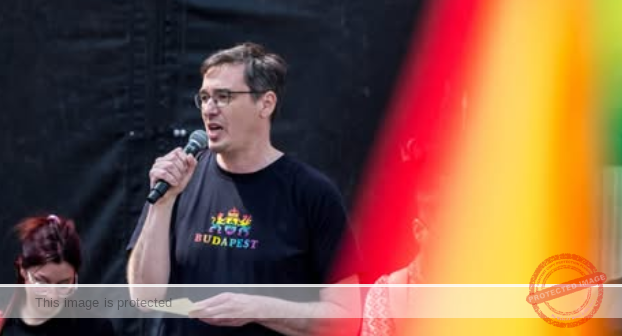
Budapest’s liberal mayor, Gergely Karácsony, was questioned by police on Friday regarding his involvement in organizing this year’s LGBTQ+ Pride march, which had been targeted by Hungary’s right-wing government for a ban. The march, held on June 28, became the largest event of its kind in Hungary’s history, defying government efforts to suppress it.
What Happened
Karácsony arrived at Hungary’s National Bureau of Investigation on Friday morning, where he was met by a crowd of around 200 supporters. Before entering the police headquarters under escort, the mayor addressed his supporters, emphasizing the importance of freedom in Hungarian society. “A month ago at Budapest Pride, very, very many of us told the whole world that neither freedom nor love can be banned in Budapest,” Karácsony said. “And if it cannot be banned, then it cannot be punished.”
In response to the investigation, Karácsony was formally accused of organizing a prohibited event. However, he declined to answer the police’s questions during the interrogation.
Background and Political Context
The controversy stems from a law passed by Prime Minister Viktor Orbán’s government in March, which banned Pride events and authorized the use of facial recognition tools to identify attendees. Despite the law and the threat of heavy fines, approximately 300,000 people participated in the June 28 march, making it a major act of defiance against Orbán’s government.
Karácsony, known for his liberal stance, has been a vocal critic of the government’s anti-LGBTQ+ policies. The law banning Pride events is part of a broader legislative push by Orbán’s Fidesz party to restrict LGBTQ+ rights. A 2021 law banned the portrayal of homosexuality to minors under the guise of child protection, drawing comparisons to similar actions in Russia.
The Hungarian government has framed Pride events as a violation of children’s rights, claiming that such events threaten their moral and spiritual development. This rhetoric has been met with strong condemnation from rights groups and European politicians, who have argued that it is discriminatory and repressive.
Public Support and Criticism
While Karácsony has been under investigation, Budapest Pride President Viktória Radványi praised him for his moral courage and commitment to protecting citizens’ fundamental rights. Speaking outside the investigation headquarters on Friday, Radványi said, “Being a mayor is not just about arranging public transportation… it also means standing up and protecting citizens when their rights are attacked.”
Karácsony also spoke out after his questioning, expressing that the government’s attempt to ban Pride had backfired. He argued that the government had failed in its efforts to suppress the LGBTQ+ community, saying, “This force is weakened now and no longer has any effect over people’s thinking.”
Looking ahead to the national elections in spring 2024, Karácsony framed the vote as an opportunity for Hungary to reclaim its position within Europe, where freedoms and rights are upheld. “We want to live in a country where freedom is not for the holders of power to do what they want, but for all our compatriots,” he said.
What Happens Next
The legal proceedings against Karácsony and other Pride organizers continue, with the government maintaining that the Pride march was held illegally. While no charges have been pressed against participants, investigations into those who organized the event are ongoing.
The mayor’s comments reflect the growing political tension in Hungary, as citizens and officials alike grapple with the country’s path toward human rights and freedom in the face of governmental control.
This story may be updated with more information as it becomes available.

