
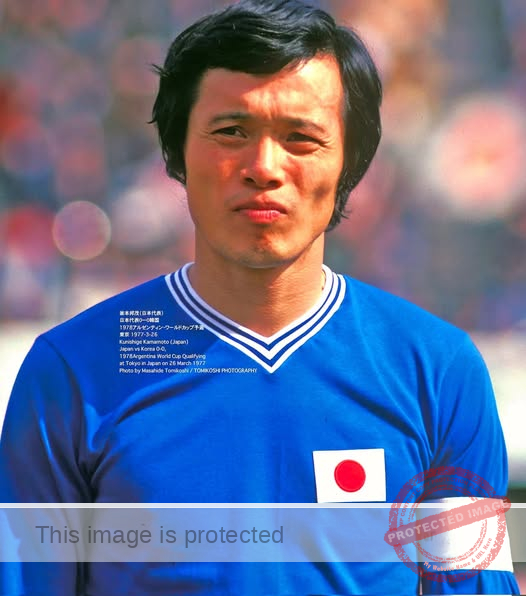
Japan – The Japanese football community is in mourning after the passing of Kunishige Kamamoto, widely regarded as the greatest striker in the nation’s history, who died at the age of 81. Kamamoto’s exceptional career on the pitch, coupled with his contributions to the development of the sport in Japan, have left an indelible mark that will be remembered for generations.
What Happened
Kunishige Kamamoto’s passing marks the loss of an iconic figure in Japanese football. Kamamoto’s extraordinary achievements as a striker on both the national and club levels remain unmatched in the country’s history. His name is synonymous with excellence in the sport, and his death has left the football world deeply saddened.
Who Was Kunishige Kamamoto
Born on May 5, 1944, in Kyoto, Japan, Kamamoto became the face of Japanese football in the 1960s, and his name is forever linked to the nation’s footballing glory. His crowning achievement came at the 1968 Mexico City Olympics, where he played a pivotal role in Japan’s first and only Olympic medal in men’s football, securing a bronze medal. Kamamoto’s seven goals in the tournament earned him the top scorer title, and his stellar performance became a historic moment in Japanese sports history, inspiring generations of young players.
Between 1964 and 1977, Kamamoto earned 76 caps for the Japanese national team and scored 75 goals, an extraordinary strike rate that has never been surpassed. His goal-scoring record remains a gold standard in Japan, and his name is still celebrated in football lore. Kamamoto’s natural talent for finding the back of the net made him a revered figure, and his unbreakable records continue to be a benchmark for future generations.
Kamamoto also enjoyed a successful club career with Yanmar Diesel (now Cerezo Osaka), where he led the team to multiple league titles and was frequently honored with individual scoring accolades. His club career mirrored his international success, cementing his status as one of Japan’s footballing legends.
In the late 1990s, Kamamoto transitioned into football administration, where he served as vice president of the Japan Football Association (JFA). He played a crucial role in Japan’s **successful bid to co-host the 2002 FIFA World Cup with South Korea. Kamamoto’s contributions to the sport extended far beyond his playing days, and his legacy as a respected figure in football administration continues to be felt today.
Background or Timeline
- May 5, 1944: Kunishige Kamamoto was born in Kyoto, Japan.
- 1968: Kamamoto led Japan to its first Olympic medal in men’s football, winning a bronze in Mexico City, scoring seven goals and becoming the tournament’s top scorer.
- 1964-1977: Kamamoto earned 76 caps and scored 75 goals for Japan’s national team.
- Late 1990s: Kamamoto became vice president of the Japan Football Association (JFA), playing a significant role in Japan’s successful bid to host the 2002 FIFA World Cup.
Public or Social Media Reaction
Following the news of Kamamoto’s death, tributes have poured in from across Japan’s football community and beyond. Former teammates, coaches, and fans have expressed their grief, recalling his contributions to the game. One tribute from a former teammate stated, “Kamamoto-san wasn’t just a legend on the field, but a man who inspired all of us with his professionalism, humility, and passion for the game.”
Official Statement or What Happens Next
The Japan Football Association (JFA) has expressed deep sorrow at Kamamoto’s passing, describing him as a “national treasure” and a key figure in the development of football in Japan. His family has requested privacy during this time of mourning, and funeral arrangements will be shared at a later date.
Closing
Kunishige Kamamoto leaves behind an extraordinary legacy that extends beyond his incredible statistics. He was not only Japan’s greatest goal scorer but also a symbol of perseverance, national pride, and the power of sport to bring people together. Though his passing marks the end of an era for Japanese football, his spirit will live on through the countless lives he touched, the goals he scored, and the generations he inspired.
Rest in peace, Kunishige Kamamoto. Your legacy will live on in the hearts of football fans around the world.

