
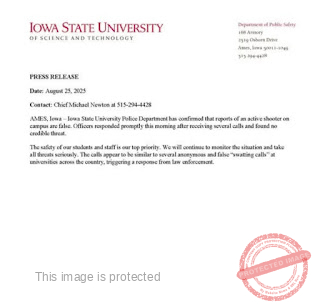
On Monday, August 25, 2025, the Iowa State University campus was plunged into a state of fear and uncertainty after emergency calls falsely reported an active shooter. The chilling series of events led to a campus-wide lockdown and an overwhelming law enforcement response.
What Happened
Shortly after noon, campus alerts warned Iowa State University students, faculty, and staff to shelter in place, lock doors, and wait for further instructions. As the university was buzzing with activity at the start of a new semester, the sudden alarm left the community in panic, with students huddling in classrooms, dorm rooms, and closets. Sirens echoed through the quieted campus, heightening the fear that something dire was unfolding.
Law enforcement responded swiftly, deploying armed police teams from various agencies to comb through lecture halls, dormitories, and common spaces, searching for a shooter. The tense situation escalated as officers in tactical gear moved systematically across campus. The hours that passed without clarity only fueled the fear among those trapped in lockdown.
Ultimately, after a thorough search, authorities confirmed that no gunman or gunfire existed. The entire situation was revealed to be a “swatting” hoax—an increasingly common malicious act where false reports of violence are made to provoke massive emergency responses.
Who Is Behind the Incident
Swatting is a dangerous trend where pranksters or malicious actors exploit emergency systems to create chaos. The false alarm at Iowa State University is a stark reminder of how vulnerable campuses can be to such hoaxes. The growing frequency of these incidents has led authorities to acknowledge the increasing danger, with pledges to improve safety protocols and strengthen investigative efforts in response.
Public or Social Media Reaction
The emotional toll of the event was heavy. While no one was physically harmed, students reported feelings of panic, vulnerability, and fear, with some experiencing panic attacks. Parents voiced their outrage, expressing concern about the diversion of critical resources from real emergencies and the deep psychological impact of such hoaxes. The false alarm also raised awareness about the broader issue of swatting across schools and universities in the U.S., further deepening concerns over campus safety.
Official Statement or What Happens Next
“This was a frightening and disruptive event for our community,” Iowa State University officials stated. “While we are relieved there was no actual threat, we recognize the emotional impact this caused and will work to support our students and staff.” As the university resumes its normal operations, officials have vowed to bolster campus safety and improve communication protocols to prevent future incidents.
Despite the false alarm, the fear was tangible, underscoring the need for increased vigilance and stronger safeguards against swatting incidents. The swift response from law enforcement was met with gratitude from many, who acknowledged the preparedness displayed in the face of a non-existent threat.
This story may be updated with more information as it becomes available.
