
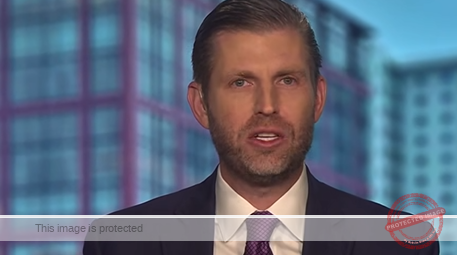
Eric Trump has made a strong statement following the assassination of political activist Charlie Kirk, connecting the incident to a broader narrative of political violence against conservatives, including his own family.
What Happened
In a recent appearance on the “Will Cain Country” podcast, Eric Trump warned of growing political violence in the United States, highlighting the tragic shooting death of his longtime family ally, Charlie Kirk, as the latest in a series of attacks. Kirk, the founder of Turning Point USA, was shot and killed while speaking at Utah Valley University on September 13, 2025. The gunman allegedly shouted “fascist” during the attack, prompting Trump to draw comparisons to other acts of political violence, including the 2024 shooting of his father, President Donald Trump, and the 2017 shooting of House Majority Leader Steve Scalise.
“This is part of a long-running campaign against conservatives,” Trump said, criticizing what he views as a political siege aimed at his family and other right-wing figures. He emphasized that the violence is not isolated, pointing to impeachment attempts, trials, and assassination attempts as part of a wider effort to “take us out of the game.”
Who Was Charlie Kirk?
Charlie Kirk was a prominent conservative activist and founder of Turning Point USA, an organization focused on empowering young people to promote conservative values. Kirk was known for his outspoken support of conservative causes, including free speech, gun rights, and opposition to progressive policies. His death sent shockwaves through the political community, with both allies and opponents condemning the violence.
Kirk is survived by his wife and two young children, and his assassination has sparked widespread discussions about the growing tension and violence in American politics. Trump’s comments reflect the broader concerns within conservative circles about the increasing targeting of public figures from the right.
Career/Legacy or Background
Kirk’s legacy as a leading voice in the conservative movement will likely remain defined by his commitment to influencing young minds through activism and media. Through Turning Point USA, he built a platform for younger generations to engage in politics and advocate for right-wing policies. His work and presence in political circles made him a key figure, particularly within the Trump family’s political orbit, where he was seen as a loyal ally and friend.
Trump’s remarks about Kirk’s death underscore the deep political divide in the United States, with Kirk’s assassination adding to the list of high-profile incidents that have raised questions about safety, political expression, and the increasing volatility of American public discourse.
Public/Social Media Reactions
The reaction to Kirk’s assassination has been mixed. Conservative groups have rallied around the idea of a political motive behind the attack, using the incident as a rallying cry for unity among conservatives. On social media, many expressed anger at the act of violence, with #JusticeForCharlie trending alongside #StopPoliticalViolence.
Meanwhile, liberal commentators have raised concerns about the rising threats to public figures across the political spectrum. Many pointed to the dangerous rhetoric and divisiveness in political discourse as factors fueling such violence.
Official Statements or What Happens Next
Following the tragedy, several public figures, including Governor Tim Walz of Minnesota, have condemned the act as a politically motivated assassination. Walz had previously labeled the killing of Melissa Hortman, a Democratic Minnesota state legislator, as politically charged. Kirk’s death now adds to the growing list of politically motivated attacks that have raised alarms about the safety of elected officials and activists across the ideological spectrum.
The FBI is actively investigating the incident and has promised swift action against the suspect, who is currently in custody. As for the broader political fallout, figures on both sides of the aisle have called for heightened awareness and a de-escalation of rhetoric, though the future of political discourse remains uncertain.
Closing Line
This story may be updated with more information as it becomes available.
