
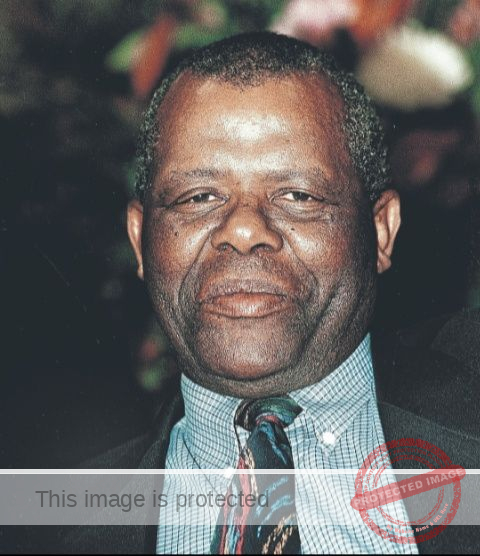
Steve Vukile Tshwete, born on 12 November 1938 in Springs, East Rand, South Africa, was a towering figure in the fight against apartheid. As a dedicated anti-apartheid activist and politician, Tshwete’s life was marked by resilience, sacrifice, and an unyielding commitment to the liberation of his people. His legacy continues to resonate in South Africa’s political landscape, particularly in the spheres of sports and security.
Early Life and Political Awakening
Born to Xhosa parents, Steve was the eldest of four siblings. His family moved to Peelton (Nkonkqweni), a black township near King William’s Town in the Eastern Cape when he was still a baby. It was there that his political interests were sparked, nurtured by his early exposure to the Xhosa newspaper Imvo Zabantsundu, which ignited his awareness of social issues. Taught to read by his mother before he even started primary school, Steve’s early education laid the foundation for his later political involvement.
He attended Forbes Grant Secondary School in King William’s Town, where his introduction to the African National Congress (ANC) began through its publications. His political engagement grew during his time at Welsh High in East London, where he joined the ANC’s African Students’ Association. This was the beginning of a lifelong commitment to the cause of liberation.
Involvement with Umkhonto we Sizwe and Imprisonment
After finishing school, Steve Tshwete became actively involved in the ANC’s armed wing, Umkhonto we Sizwe, which was formed to resist the apartheid regime through armed struggle. His activism led to his arrest by the apartheid authorities, and he was sentenced to 14 years in prison. From February 1964 to 1978, he was incarcerated at the infamous Robben Island prison, where he endured harsh conditions alongside other notable political prisoners like Nelson Mandela.
Despite being imprisoned, Tshwete remained deeply involved in the struggle, and his commitment to the ANC never wavered. Upon his release, he resumed his political activities and played a pivotal role as a regional coordinator for the United Democratic Front, a key organization that united anti-apartheid movements across the country.
Exile and Return to South Africa
After spending time in exile in Zambia, Tshwete returned to South Africa following the 1994 democratic elections, marking the end of apartheid and the beginning of a new era in the country’s history. His return symbolized the triumph of perseverance and struggle over oppression.
Tshwete was appointed the first Sports Minister in South Africa’s post-apartheid government. In this role, he worked tirelessly to promote sports and unify the country through recreational activities. Later, he was appointed Minister of Safety and Security, where he continued to serve the country, making notable contributions to building a safer, more secure South Africa.
Health Struggles and Passing
In March 2002, Tshwete developed back pain, which eventually led to complications. Confined to a wheelchair, he was admitted to Voortrekkerhoogte’s 1 Military Hospital in Pretoria. There, he battled pneumonia and liver failure following an operation on his spine. Sadly, Steve Tshwete passed away on 26 April 2002 at the age of 63.
He was survived by his wife, Pamela, and his children: Lindela, Mayihlome, Mandlakazi, and Yonda. His death was mourned by his family, friends, and the nation, and he was honored with a state funeral on 4 May 2002. Flags were flown at half-mast in his honor, and he was laid to rest at Peelton Cemetery in the Eastern Cape, the area that had shaped much of his life.
Legacy and Posthumous Recognition
Steve Tshwete’s contributions to South Africa’s freedom struggle have not been forgotten. The municipality in Mpumalanga was named in his honor, cementing his legacy in the hearts of many. In 2004, he was posthumously awarded the Order of Luthuli in Silver for his exceptional contributions to the liberation of South Africa.
His unwavering dedication to justice and equality remains a source of inspiration, and his legacy lives on in the nation’s political and social fabric.
May Steve Vukile Tshwete’s soul continue to rest in peace. His memory will forever be honored by the South African people who benefited from his courage and sacrifices.
