
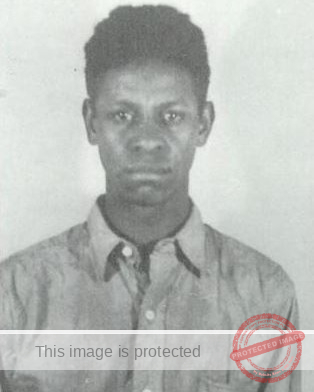
In 1945, a young Black boy was found wandering the streets of Jacksonville, Illinois, alone, mute, and unable to hear. He was confused, frightened, and had no way of communicating his identity. The only clue he could offer was the name “Lewis,” scrawled hastily on a piece of paper. Despite this, no one ever came forward to claim him. For over 30 years, the boy, later known as John Doe No. 24, was forgotten by the world, living in institutions where he faced neglect and abuse.
The Beginning of the Mystery
On that cold morning in October 1945, police officers discovered the young boy aimlessly walking through Jacksonville. When they tried to question him, they learned that he was both deaf and mute. Unable to communicate his name or origin, the boy only wrote the word “Lewis,” leaving behind a fleeting clue that led to no answers.
With no one to identify him, the courts declared him “feeble-minded” — a cruel term of the era — and committed him to the state’s mental health system. From then on, he became known as John Doe No. 24, a label that followed him through his life, as he was moved from institution to institution.
A Life in Institutions
For decades, John Doe No. 24 lived in the Lincoln State School and Colony, part of a system where neglect and abuse were rampant. Despite these harsh conditions, he managed to survive. In 1978, after years of being known only as John Doe, a judge granted him the name “John Doe Boyd,” allowing him to apply for Social Security. But the name wasn’t truly his — only he knew who he truly was. The questions surrounding his identity and life before the streets of Jacksonville remained unanswered.
The Silent Life of John Doe Boyd
As the years went on, John Doe Boyd’s story became one of resilience. Eventually going blind due to an undiagnosed condition, he was moved to the Smiley Living Center in Peoria, where those around him described him as witty, gentle, and full of heart. Though his life had been largely lived in silence, John Boyd found solace in small comforts, such as his straw hat and his backpack filled with trinkets, rings, and silverware — small tokens of a life he might have once known.
He would often pantomime stories of jazz clubs and circus parades, giving rare glimpses into his past. But no one knew the life he had left behind. What memories did he hold in his heart? What secrets did he carry with him from the days before he became John Doe No. 24?
A Forgotten Life, and a Legacy of Music
On November 28, 1993, John Doe Boyd passed away from a stroke at the age of 64. He had spent much of his life without a name, and the truth of his identity remained a mystery. His death marked the end of a long, lonely journey, but it also inspired a moment of recognition.
When singer-songwriter Mary Chapin Carpenter read his story in The New York Times, she was moved by the tragedy of his life and decided to honor him. She wrote a song, “John Doe No. 24,” and purchased a headstone for him — ensuring that he would never again be buried without a name. His memory, once lost to the world, was now being recognized.
A Call for Answers
Despite his passing, the mystery of John Doe Boyd remains unsolved. Who was the boy who wandered the streets of Jacksonville? Where did he come from? What was his true identity?
The Jacksonville Police Department continues to search for answers. If anyone has any information about John Doe No. 24’s identity or his life before that fateful day in 1945, they are urged to come forward.
Contact Information:
If you know anything — anything at all — about who this boy was, please contact the Jacksonville Police Department at 217-479-4630. Everyone deserves to be known. Everyone deserves to come home.
Conclusion:
John Doe Boyd may have carried his secret to the grave, but his story lives on, reminding us all of the importance of identity, recognition, and compassion. His life, though marked by mystery and loss, is now honored by those who refused to let him be forgotten.
