
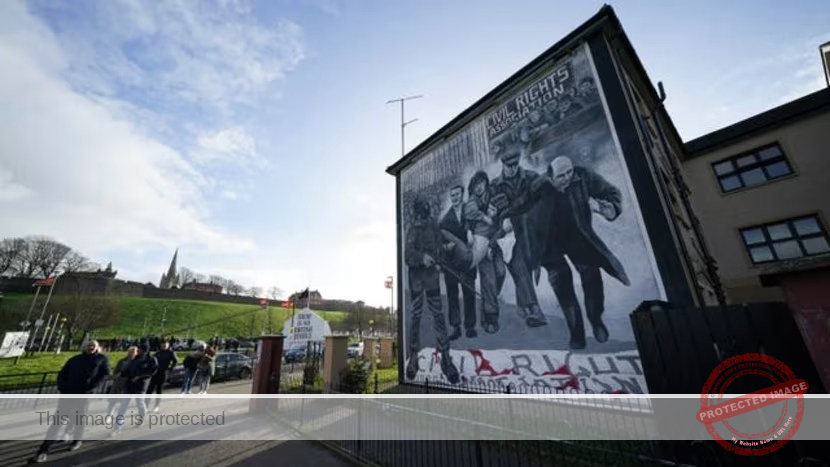
BELFAST, NORTHERN IRELAND — The high-profile murder trial of Soldier F, charged with the deaths of two civilians during the notorious Bloody Sunday massacre in 1972, is continuing at Belfast Crown Court.
Background of the Case
The trial revolves around the tragic events of January 30, 1972, when 13 individuals were killed by members of the Parachute Regiment during a civil rights protest in Londonderry, Northern Ireland. The incident, known as Bloody Sunday, is a defining moment in Northern Ireland’s troubled history. Soldier F is accused of murdering two men, James Wray and William McKinney, and attempting to murder several others.
Judge Dismisses No-Case-to-Answer Application
On Thursday, Judge Patrick Lynch delivered a ruling rejecting the defense’s request for a no-case-to-answer verdict. The defense argued that the prosecution’s case was based on unreliable evidence. However, Judge Lynch ruled that statements from Soldiers G and H, two former paratroopers, would be admissible in the case, allowing the trial to proceed.
“I decline to direct a verdict of not guilty on this basis,” Judge Lynch stated, before inviting the defense to open their case. The defense lawyer, Mark Mulholland KC, confirmed that his client, Soldier F, would not be giving evidence.
Accusations Against Soldier F
Soldier F, whose full identity remains protected for legal reasons, faces two murder charges related to the deaths of James Wray and William McKinney. He also faces five counts of attempted murder related to other individuals, including Michael Quinn, Patrick O’Donnell, Joseph Friel, Joe Mahon, and an unnamed person. Soldier F has pleaded not guilty to all seven counts, and his trial continues without a jury, as is customary in certain cases in Northern Ireland.
Trial Proceedings and Public Attention
The trial has attracted significant public and media attention, particularly from relatives of the victims and those with a personal connection to the Bloody Sunday events. Relatives of Wray and McKinney, as well as supporters, are observing the proceedings from the public gallery each day. Notably, Veterans Commissioner for Northern Ireland, David Johnstone, and Paul Young, from the Northern Ireland Veterans Movement, are also present at the court.
Soldier F is seated in the courtroom behind a curtain, a precautionary measure to protect his identity throughout the trial.
The Continued Impact of Bloody Sunday
Bloody Sunday remains one of the most significant and controversial events in the history of the Troubles in Northern Ireland, with the deaths on that day continuing to resonate deeply within both the local community and across the broader political landscape. The case against Soldier F is seen as a crucial moment in the ongoing search for justice for the victims and their families, who have long demanded accountability for the actions of the British Army on that day.
As the trial moves forward, more details are expected to emerge regarding the events of Bloody Sunday and the role of the Parachute Regiment.
This is a developing story, and updates will follow as more information becomes available.
