
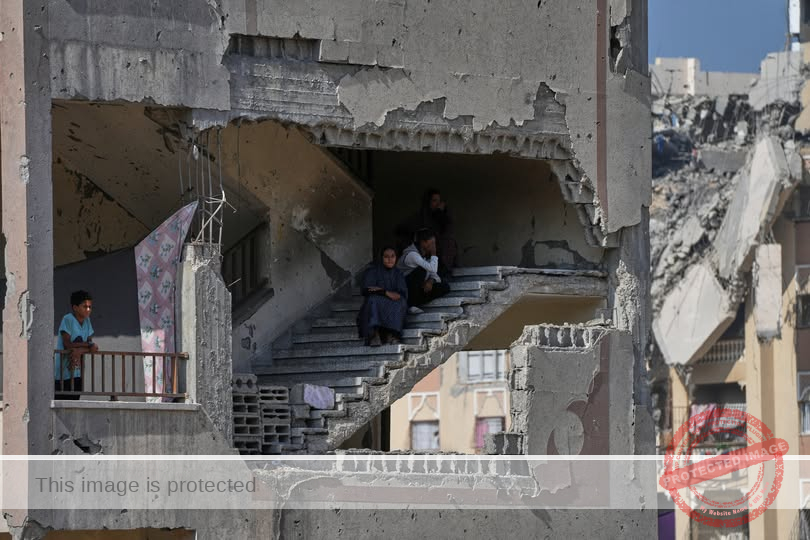
Israel launched airstrikes in southern Gaza on Sunday, after accusing Hamas of violating a fragile ceasefire agreement between the two sides. The Israel Defense Forces (IDF) claimed that “terrorists” fired an anti-tank missile at Israeli troops operating in the Rafah area, which is part of Israeli-controlled Gaza under the ceasefire terms.
What Happened
The IDF reported that its forces came under fire from Hamas in Rafah, a southern Gaza area that Israel has controlled as per the ceasefire agreement. In retaliation, the IDF carried out airstrikes targeting the area, focusing on dismantling tunnel shafts and military structures allegedly used for terrorist activities. The IDF described the missile attack as a clear violation of the ceasefire agreement and vowed to respond “firmly” to any further threats.
The office of Israeli Prime Minister Benjamin Netanyahu issued a statement via social media platform X, confirming that Netanyahu had directed strong action in response to the alleged ceasefire violation. “Following the violation of the ceasefire by Hamas,” the post read, “Prime Minister Netanyahu held a consultation with the Defence Minister and the heads of the security establishment and directed that strong action be taken against terrorist targets in the Gaza Strip.”
Who Was Involved
The ceasefire agreement had been in place as part of ongoing peace negotiations, though violations have continued to surface throughout the conflict. The Rafah area, one of the key contested zones, has become a focal point in the dispute. The IDF claimed that the missile fire from Hamas came from this region, which it describes as under its control.
Hamas, however, denied any involvement in the missile attack. In a statement, the group’s military arm reaffirmed its commitment to upholding the ceasefire agreement. They also expressed that they had no knowledge of any incidents in the Rafah area, and the group claimed to have had no communication with fighters there since the war resumed in March of the year. “We have no connection to any events occurring in this area and cannot communicate with any of our fighters there if any remain alive,” the statement read.
The Impact and Background of the Conflict
The ongoing tension between Israel and Hamas has led to severe humanitarian concerns, with both sides blaming each other for ceasefire breaches. Israel’s strikes are aimed at eliminating Hamas’s military infrastructure, while the group, which governs the Gaza Strip, insists that it remains committed to the ceasefire agreement.
The most recent escalation comes at a time when Israel is under increasing pressure to recover the bodies of hostages previously taken by Hamas. Over the weekend, the bodies of two hostages were handed over to the Red Cross by Hamas. These hostages, identified as Ronen Engel and Thai national Sontaya Akrasi, were confirmed to have been killed on October 7, when Hamas attacked Israel. Their bodies had been taken into Gaza, where they were recovered.
Public and Global Reactions
The news of further fighting in Gaza has garnered global attention, with leaders worldwide urging both parties to respect the ceasefire. On social media, users reacted to the continued violence, calling for an end to the conflict and pleading for peace. International bodies, including the United Nations, have condemned the continued breaches of the ceasefire and have called for both sides to return to negotiations.
The hostages’ families and supporters have expressed relief over the recovery of their loved ones’ remains but remain in anguish over the ongoing tensions and the possibility of further violence.
Official Statements and What Happens Next
Following the escalation, Israel’s government has reaffirmed its commitment to responding to attacks on its troops and infrastructure in Gaza. Prime Minister Netanyahu’s office emphasized the need to maintain security and take decisive actions against terrorist threats.
Hamas has denied the accusations, but the conflict remains deeply entrenched. The situation is increasingly complicated by the humanitarian crisis in Gaza and the international community’s calls for peace talks. The involvement of hostages and the delivery of their bodies to the Red Cross has added another layer of urgency to the situation, with hopes that the recovery process could lead to further exchanges.
Closing Line
As the situation unfolds, the world is closely watching both Israel and Hamas to see if further escalation can be avoided and whether the fragile ceasefire can be restored. This story may be updated with more information as it becomes available.
