
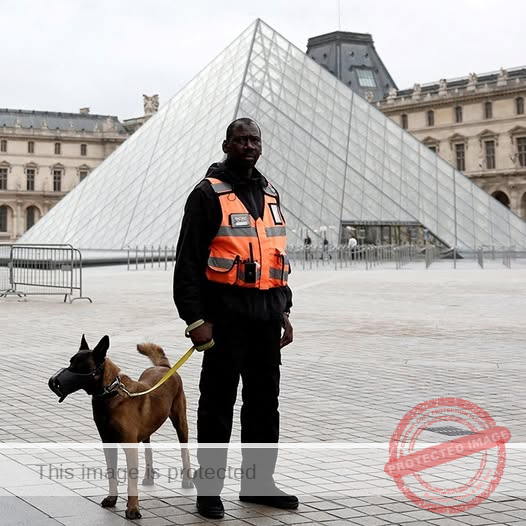
In one of the most audacious museum heists in recent memory, thieves managed to steal priceless jewels from the Louvre Museum in Paris during a brazen daylight robbery on Sunday, October 19, 2025. Authorities are investigating the possibility that the thieves were commissioned by a private collector or acted with the intent of laundering the stolen jewels, according to Paris prosecutors.
What Happened During the Heist?
On Sunday morning, masked thieves, disguised as construction workers, infiltrated the Louvre Museum in one of the most dramatic and well-coordinated heists in recent history. In a matter of just seven minutes, the thieves struck and managed to steal eight priceless pieces of royal jewelry. They used a basket lift to extend to a window, smashing it open with an angle grinder, and used a disc cutter to slice through glass panes that protected the treasures.
Among the targeted items were valuable pieces, including the crown of Empress Eugénie, Napoleon III’s wife, which is valued at tens of millions of euros. However, the thieves were unsuccessful in taking the crown, leaving it behind as they made their escape. Despite their failure to seize this iconic item, the heist still resulted in the theft of other priceless jewels. The thieves fled the scene on motorbikes, and their identities remain unknown.
Investigation and Potential Motive
The Paris prosecutor, Laure Beccuau, spoke to local media about the ongoing investigation and the possibility that the thieves were hired by a private collector. “We’re looking at the hypothesis of organized crime,” Beccuau said. She added that if the thieves were hired by a collector, there was hope that the stolen items would remain intact and well-preserved until they could be recovered.
However, Beccuau also noted that if the robbers acted independently, the jewels could be targeted for laundering criminal proceeds. With the immense value of the jewels, the possibility of their connection to illicit activities like drug trafficking is being considered. The investigation continues to examine all leads, but foreign involvement has reportedly been ruled out.
The Aftermath and Expert Insights
Authorities have discovered a bottle of liquid and other equipment left behind by the thieves at the scene, which are now being analyzed for clues. Former jewel thief Larry Lawton, who now assists law enforcement on similar cases, has suggested that the operation may have been an inside job or that the thieves had insider information. Lawton questioned how the thieves knew about the glass thickness and whether the jewels were protected by an alarm system, raising doubts about how they could have executed such a meticulous crime.
He also speculated that the thieves would likely not sell the jewels immediately to avoid detection. “I might stash them somewhere no one knows, wait a year or two,” Lawton suggested. He noted that companies may eventually offer a reward for the return of the jewels with “no questions asked.”
Louvre Museum’s Response
In the aftermath of the heist, the Louvre Museum, the world’s most-visited museum, announced that it would remain closed on Monday, October 20, for further investigation. The closure was described as a precautionary measure as authorities continue to gather evidence and track down the suspects.
Public Reaction and What’s Next
The heist has shaken the global community, with many expressing disbelief that such a daring and well-planned robbery could occur at one of the world’s most iconic institutions. As the investigation continues, law enforcement is seeking tips from the public to help locate the thieves and recover the stolen jewels.
For now, the Louvre and its treasures are left reeling from this dramatic theft, and the hunt for the perpetrators continues.
This story may be updated with more information as it becomes available.
