
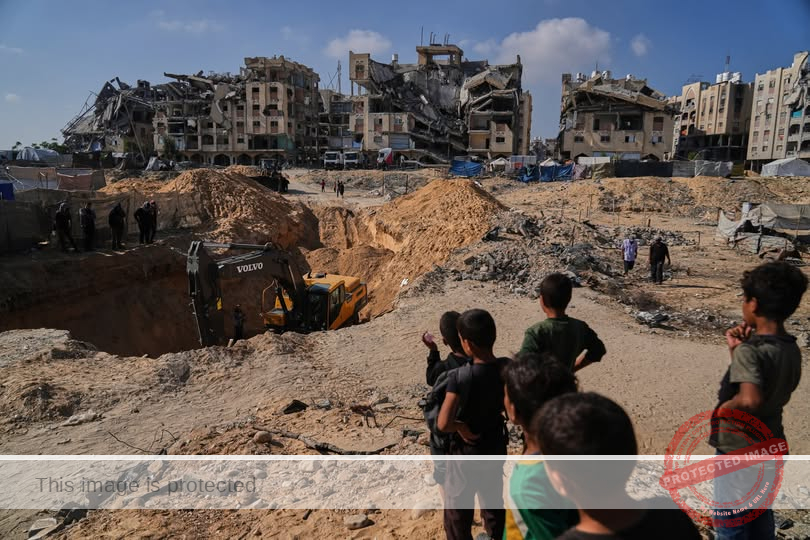
Jerusalem, Israel — Israeli Prime Minister Benjamin Netanyahu has announced immediate orders for “powerful strikes” in Gaza following renewed hostilities with Hamas. The escalation comes after Hamas launched an attack on Israeli forces in southern Gaza, marking a further deterioration of the fragile ceasefire that has been in place since October 10, 2025.
What Happened
The announcement by Netanyahu was made shortly after reports that Hamas opened fire on Israeli troops in southern Gaza. Witnesses and reporters, including those from ITV News and the Associated Press, observed explosions and tank fire across Gaza, particularly in Gaza City and Deir al-Balah. The violence followed a tense and controversial situation involving the remains of an Israeli hostage.
Israel had earlier accused Hamas of violating the ceasefire agreement by failing to return the remains of Israeli hostages. Hamas returned some of the remains, but Israeli authorities stated that Hamas staged the “discovery” of the body by manipulating the remains, prompting strong condemnation. According to the Israel Defense Forces (IDF), this is another example of Hamas’ disregard for agreements, as they also allegedly tampered with the remains for media purposes.
Netanyahu condemned Hamas’ actions as a “clear violation” of the ceasefire terms. He emphasized that Hamas had violated agreements by not returning all Israeli hostages’ remains and by resuming attacks.
The Hostage Situation and Ceasefire Challenges
The conflict surrounding the remains of Israeli hostages has become a central issue as both parties struggle to implement the terms of the ceasefire agreement. There are still 13 bodies of hostages that have not been returned to Israel. While Hamas claims it is struggling to locate the remains amid the destruction in Gaza, Israel accuses the militant group of deliberately stalling the process.
Hamas has stated that it plans to hand over another body of a hostage by Tuesday evening. However, the delay in returning hostages’ remains is raising concerns about the implementation of the subsequent stages of the ceasefire, which include disarming Hamas and determining the future governance of Gaza.
The ceasefire, which was initially brokered on October 10 as part of a broader 20-point plan outlined by US President Donald Trump, marked the first significant halt in fighting between Hamas and Israel. While the ceasefire was intended to lead to discussions on key issues such as the disarmament of Hamas and an international security force in Gaza, the slow progress in returning the hostages has complicated those negotiations.
The Situation on the Ground
Tensions continue to escalate on the ground, with violence flaring up on multiple fronts. Israeli troops were shot at in the southern city of Rafah on Tuesday, and the IDF responded by returning fire. However, an official announcement has yet to be made regarding this particular incident.
The slow return of hostages’ remains has emerged as a major challenge to the success of the ceasefire. Authorities on both sides remain at an impasse as they attempt to negotiate terms for the future of Gaza, particularly regarding who will oversee the territory and the deployment of international peacekeeping forces.
Public and International Reactions
The return of Israeli remains and the further escalation of violence in Gaza has prompted widespread concern among the international community. Human rights organizations, as well as leaders across the globe, have called for renewed efforts to ensure the safety of civilians and the protection of international humanitarian law.
The United States, under President Donald Trump’s administration, continues to push for adherence to the ceasefire agreement, while simultaneously urging Israel and Hamas to resolve the ongoing challenges diplomatically.
What Happens Next
As tensions in Gaza continue to escalate, both sides are facing immense pressure to abide by the terms of the ceasefire agreement. Israel has warned that it will respond to any further attacks, and Netanyahu’s order for powerful strikes indicates that the situation may soon worsen.
Meanwhile, humanitarian aid organizations continue to call for better access to Gaza’s civilian population and the safe return of all hostages’ remains. The world is watching closely as both Israel and Hamas navigate the complexities of their ceasefire and the challenges ahead in achieving lasting peace.
This story may be updated with more information as it becomes available.
