
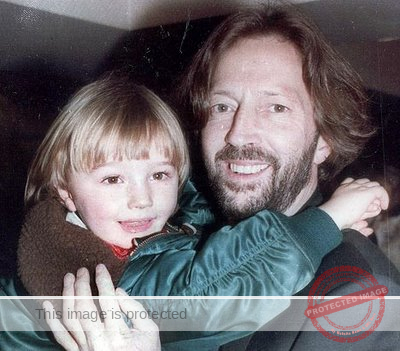
On March 20, 1991, legendary musician Eric Clapton faced an unimaginable tragedy when his four-year-old son, Conor Clapton, fell from the 49th floor of a Manhattan apartment building. What followed was a journey through grief, reflection, and the creation of one of the most hauntingly beautiful songs in music history — “Tears in Heaven.”
What Happened
That spring morning in New York City, a tragic accident claimed the life of young Conor Clapton, forever altering his father’s world. The day before, Eric and his son had shared a joyful outing at the circus — a simple day that would become a cherished final memory. The following day, in a single, devastating moment, Conor fell from an open window, an accident that shattered Clapton’s heart and silenced his music.
The aftermath was suffocating. Clapton, who had already endured years of personal turmoil and addiction, was thrust into a grief deeper than any he had ever known. For weeks, even months, he couldn’t bring himself to play guitar — the very instrument that had always been his voice.
Who Was Conor Clapton
Conor was born on August 21, 1986, to Eric Clapton and Italian actress Lory Del Santo. He was a bright, joyful child who brought laughter, hope, and a renewed sense of purpose into his father’s life. After years of battling addiction and loss, Eric had found a new reason to live — his son.
Friends recall that Eric’s world revolved around Conor. The bond between them was genuine and pure, a reflection of love rediscovered. For Clapton, Conor represented innocence, light, and the promise of a second chance at life — a chance that was cruelly taken away too soon.
The Birth of “Tears in Heaven”
In the depths of sorrow, Eric Clapton turned once again to the only thing that had ever helped him process pain — music. What emerged was “Tears in Heaven,” a song that spoke not only to his grief but to the universal pain of losing someone you love.
Released in 1992 on his Unplugged album, the song resonated around the world. With lines like “Would you know my name, if I saw you in heaven?” Clapton gave voice to parents and families who had lost children — transforming his private agony into collective healing.
The song went on to win three Grammy Awards in 1993, including Record of the Year, Song of the Year, and Best Male Pop Vocal Performance. But for Clapton, the accolades were secondary. Performing it live became a deeply emotional act — one he eventually stopped doing in the early 2000s, as it was too painful to revisit the wound each time.
Legacy of Love and Recovery
The tragedy changed Eric Clapton’s life forever. Determined to honor his son’s memory, he committed fully to sobriety — not for fame or fortune, but to live a life worthy of the love he had lost. In 1998, he founded the Crossroads Centre in Antigua, a rehabilitation facility helping thousands of people overcome addiction. Through this act of compassion, he turned unimaginable pain into hope for others.
Today, at 79 years old, Eric Clapton still carries Conor’s memory with him. Every note he plays, every lyric he writes, echoes with the depth of that loss — and the love that endures beyond death.
Public and Cultural Impact
Tears in Heaven remains one of the most powerful songs ever written about grief. It has been performed at memorials, shared among grieving families, and used as a message of comfort and remembrance. Music critics often cite it as one of the most emotionally raw performances ever recorded — proof that love, even in loss, can become art that heals.
The song also changed how audiences viewed Eric Clapton. It revealed a side of the rock icon rarely seen before — vulnerable, reflective, deeply human.
What Happens Next
Though Eric Clapton rarely performs “Tears in Heaven” today, its message endures. Conor’s short life continues to inspire millions, reminding the world that love never truly dies — it transforms.
As time passes, the story of Eric and Conor Clapton stands as a testament to resilience, healing, and the unbreakable bond between a father and his child.
This story may be updated with more information as it becomes available.
