
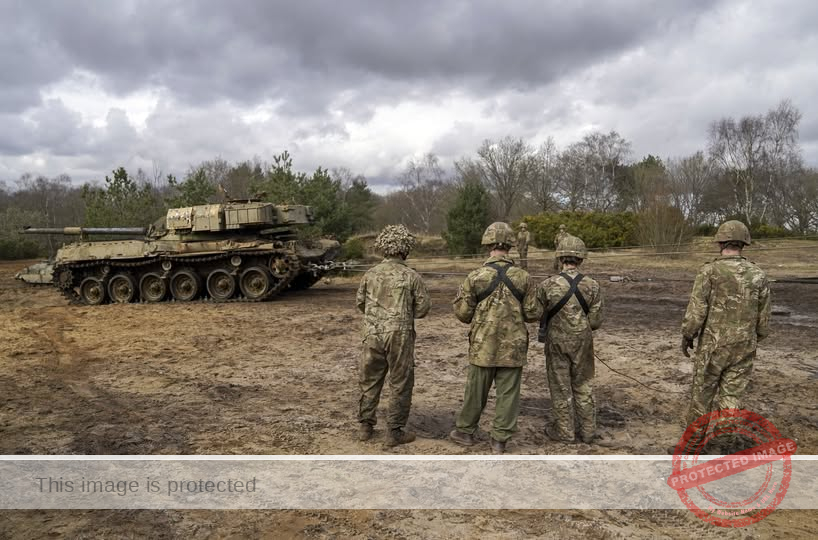
The UK government has confirmed that a voluntary military gap year scheme will be introduced for school and college leavers before the next general election, Defence Secretary John Healey told ITV News on 3 November 2025. The scheme forms part of the wider Strategic Defence Review (SDR) aimed at making the UK’s armed forces ready for modern threats.
What Happened
In the 2025 Strategic Defence Review, the UK government outlined a number of measures to rebuild and strengthen the armed forces after years of personnel shortfalls. One of the key initiatives recommended was the introduction of a voluntary “gap year” scheme for school and college leavers, modelled on similar programmes abroad.
On 3 November, Healey confirmed that he has accepted the recommendation and intends for the gap year scheme to be up and running before the next general election, expected in 2029. He said the aim is to enable young people leaving education to spend a year in the armed forces, gain life‑skills and military training, and potentially move into longer term service.
Who Is Behind the Scheme?
The proposal is being driven by the SDR, ordered by Keir Starmer and overseen by the Defence Secretary John Healey. The SDR stated explicitly that the Ministry of Defence should consider introducing military gap years, alongside increasing cadet numbers and building a strategic reserve. The gap year scheme is voluntary and aimed at young adults, rather than being compulsory national service, which the government has sought to avoid emphasising.
The Policy Details and Legacy
While the exact design of the scheme remains under development, it is expected to mirror aspects of the Australian Defence Force’s gap year model, which pays participants and gives them roles in navy, army or air force for a year.
In the UK context, this gap year is part of a broader strategy to reverse the “hollowing out” of the armed forces, rebuild recruitment and renew the national connection to those who serve. The SDR also emphasises that the UK must increase cadet numbers by 30% and expand flexible entry and reserve options.
If successful, the legacy of the scheme could be a stronger pipeline into the armed forces, improved youth engagement, and stronger national resilience—but it will also require new funding, clear design, and effective implementation.
Public and Social Media Reactions
The announcement has generated considerable discussion online and in the media. Some commentators welcome the gap year scheme as a positive way to give young people options, build character and reconnect society with military service. The Loughborough University commentary called it a sensible adaptation of the Australian model.
However, critics caution that the policy may divert attention from deeper structural issues in recruitment and retention, and that voluntary schemes may not be enough to address chronic shortfalls in the armed forces. Public forums and social media posts reflect both optimism and scepticism, with hashtags such as #MilitaryGapYear and #UKDefence emerging in posts discussing youth opportunity and national service.
Official Statements and What Happens Next
In his oral statement on the Strategic Defence Review, John Healey stated: “As we lose the national service generation, fewer families across this country have a direct connection to the armed forces. … So as the SDR recommends, we will… introduce a voluntary ‘gap year’ scheme for school and college leavers.”
He also emphasised that details are still being worked on and that the scheme must be launched this Parliament. ITV News quoted him as saying: “We’re working on the details now … I’m determined that in this Parliament we’ll have that sort of scheme up and running.”
The Ministry of Defence says it will assess value for money while progressing the scheme, as part of wider efforts to how to modernise the entry pathways into the services.
In the coming months, the government will publish further policy detail on eligibility, pay, duration, commitments, and how the scheme integrates with existing recruitment pathways.
Closing line:
This story may be updated with more information as it becomes available.
