
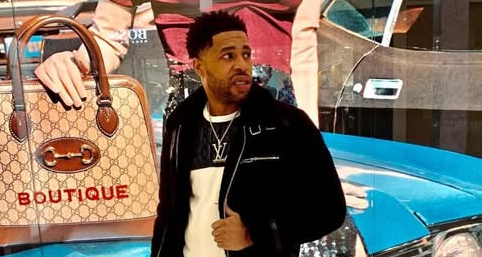
ATLANTA, GA — The family of Linton Blackwell, a well-known figure in Atlanta’s music industry, is demanding answers after a shocking autopsy revealed he was shot 17 times in the back by Gerald Walker, an off-duty Atlanta police officer.
The deadly October 11 incident occurred outside the Five Paces Inn in Buckhead, intensifying calls for accountability as the Georgia Bureau of Investigation (GBI) continues its inquiry.
What Happened in the Deadly Buckhead Shooting
According to early reports, the confrontation unfolded when officers responded to a disturbance inside the Five Paces Inn, a popular Buckhead establishment.
Witnesses say 44-year-old Linton Blackwell, widely known in the Atlanta music community as B-Green, was escorted outside before Officer Gerald Walker, who was working security while off duty, followed him into a rear parking lot.
The GBI stated that Blackwell appeared to place an object in the small of his back, prompting Walker to issue commands concerning a possible weapon. Moments later, Walker opened fire — firing 17 shots, all striking Blackwell from behind.
The autopsy’s findings have fueled outrage and confusion, with many questioning the necessity and proportion of the force used. The investigation remains active as officials review surveillance footage, witness accounts, and physical evidence from the scene.
Who Was Linton “B-Green” Blackwell?
Linton Blackwell, affectionately known as B-Green, was a respected name in Atlanta’s music industry.
At 44, he was known not only for his professional influence but also for being a devoted father and a proud representative of the East Lake Meadows community.
His longtime friend and manager, Timothy Coleman, described him as a loving, hardworking man who had strong connections in the industry.
“I never imagined he was shot 17 times in the back,” Coleman said in disbelief. “Not even one bullet hit the front.”
Friends say Blackwell was a mentor to upcoming artists and a consistent supporter of local talent. His loss has left a deep void among those who admired him both personally and professionally.
Career, Legacy, and Community Impact
Throughout his career, Linton Blackwell built a reputation as a connector within Atlanta’s music scene — someone who brought people together and uplifted others.
He often collaborated with producers, videographers, and artists working to build their names in the city.
Beyond music, he was deeply rooted in community work, showing up for neighborhood events, friends in need, and mentoring younger creatives. Many say his influence extended far beyond recording studios and stages.
His sudden death has triggered heartbreak across Atlanta, particularly among artists who considered him a pillar of support and inspiration.
Public and Social Media Reactions
Since news of the autopsy was released, social media has erupted with sadness, anger, and demands for justice.
Posts honoring B-Green have filled Facebook, Instagram, and X, with hashtags like #JusticeForBG, #LintonBlackwell, and #AtlantaMusicCommunity trending locally.
Many fans and fellow artists expressed disbelief that a man known for peace and mentorship could meet such a violent end.
“The city lost a real one,” one user wrote. “He didn’t deserve this.”
Others are calling for clarity, accountability, and a transparent investigation from the GBI.
Official Statements and What Happens Next
The Georgia Bureau of Investigation confirmed that the case is still active, and investigators are analyzing all available evidence to determine whether Officer Gerald Walker’s actions were justified.
Coleman, despite being a military veteran who respects law enforcement, insists accountability is necessary.
“Gerald Walker should be incarcerated,” he declared. “Seventeen shots in the back? That’s not self-defense.”
Blackwell’s family is expected to release additional statements as they continue to seek justice. Community leaders in Atlanta are also planning vigils and gatherings to honor his memory and push for answers.
Funeral arrangements have not yet been publicly announced.
